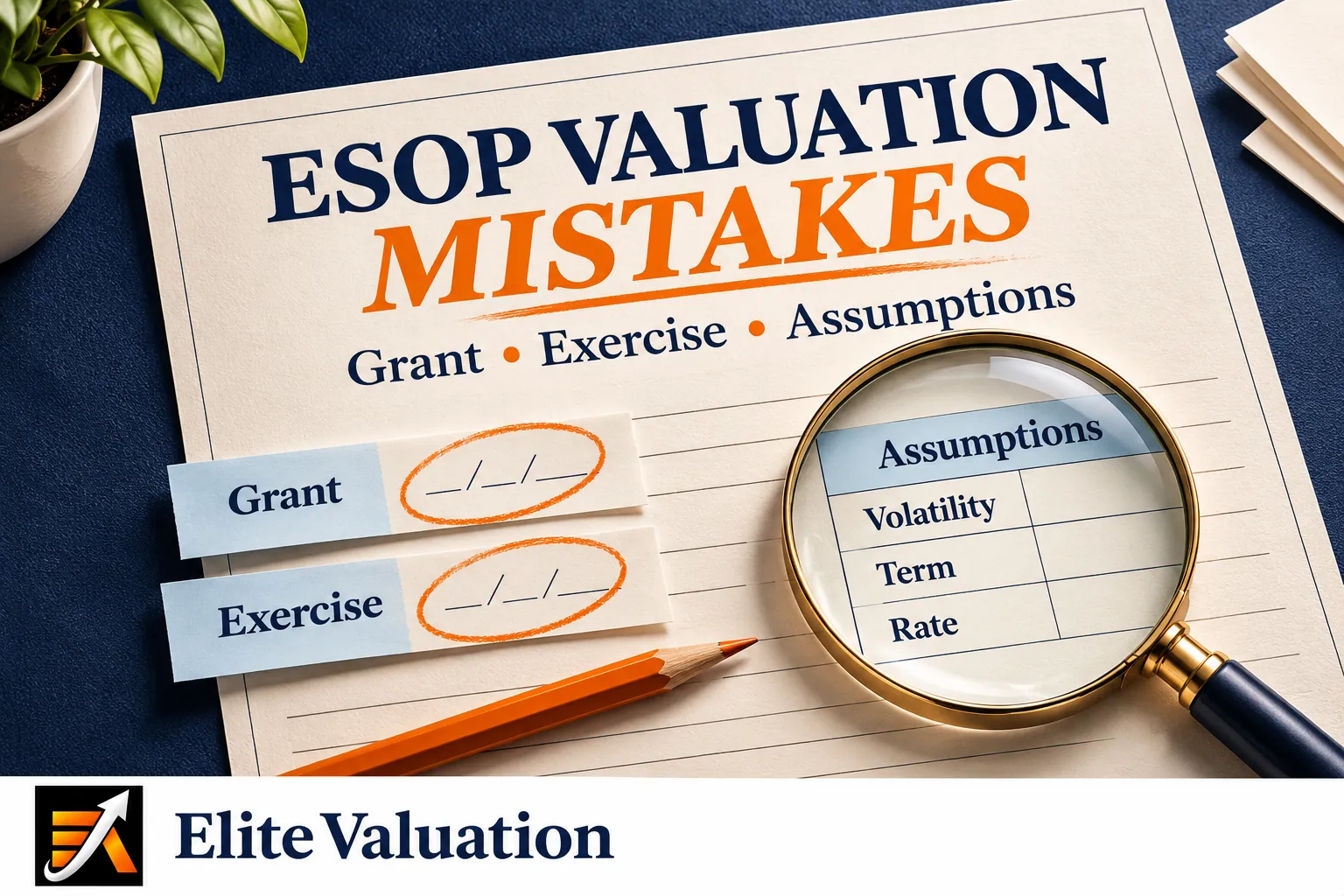
Effective ESOP communication changes behaviour only when employees understand the right they hold, the price they must pay, the dates on which they can act and the tax they will bear. Most schemes in India are designed with care and explained in one line. The board approves the pool, counsel drafts the scheme, and the grant letter states a price. Months later the employee asks what the options are worth, when they can sell, and why tax was deducted from a salary that did not visibly rise. The scheme is rarely the problem. The explanation is.
Key takeaways
- Explain the ESOP in four stages: grant, vesting, exercise and exit. Give each employee a written statement of what applies to them at each stage.
- An option is a right, not a payment. It is a right to buy one share at a fixed price after conditions are met, and its value depends on a future sale that may never happen.
- Issue the grant letter only after approvals are on record, and make it restate the vesting, price, lapse and leaver terms.
- Explain the perquisite and the TDS before the employee exercises, because the cash for both must be found in advance.
- Where the scheme prices options at fair market value on the grant date, support the price with a Valuation, and say that a Valuation is an opinion at a date, not a sale price.
- Keep a fixed calendar of briefings and statements, with one owner for the numbers.
- For a listed company, check the insider trading rules before telling employees anything price sensitive.
Who should use this playbook
This guide is for founders, CFOs, HR heads and company secretaries who run or are designing an ESOP. It assumes an unlisted company granting options under Section 62(1)(b) of the Companies Act, 2013 and the Companies (Share Capital and Debentures) Rules, 2014. Where a listed company is involved, the points differ and the text says so. For the legal design of a scheme, see our ESOP advisory services.
Why Does an ESOP Need a Communication Plan Before the First Grant?
Build communication into the plan before the first grant: name the message owner, the written record and the next action for each stage.
Whether the company is in Ahmedabad, Pune or Gurugram, the gap between intent and understanding looks the same, and the same plan closes it in Mumbai or Bengaluru.
An option sits in the gap between what the company intends and what the employee expects. The company intends to reward service and share growth. The employee hears a number of options and imagines a payout. Unless the company closes that gap in writing and in conversation, the cost of the scheme is incurred in full while much of its retention value is lost.
A useful plan answers three questions at every stage. What does the employee hold now? What must they do next? What will it cost them in cash and tax? Each stage changes the answer, so each needs its own message and its own written record.
| Stage | Employee’s question | Message owner | Written record |
|---|---|---|---|
| Grant | What have I been given, and why? | Founder, with HR | Grant letter and scheme summary |
| Vesting | What has vested, and when do I act? | HR, with the company secretary | Vesting statement |
| Exercise | What will I pay, and what will I be taxed on? | CFO or payroll | Exercise statement with the perquisite and TDS |
| Exit or leaving | What happens to my options if I go, or if the company is sold? | Board and counsel, through HR | Leaver letter, with the scheme clause quoted |
The table is the skeleton of the plan. The sections that follow fill each cell with the words, documents and figures that belong there.
What Must an Employee Understand Before Accepting an Option?
Six facts: what an option is, the exercise price, the vesting schedule, the exercise window and lapse rules, the tax on exercise, and the fact that the value depends on a future sale that may never happen. A grant communication that omits one of them invites a later dispute.
A founder in Mumbai, a CFO in Vadodara and an HR head in Delhi will all ask the same six questions, so the explanation should be the same in each office.
Explain the following before the employee signs the letter, in this order.
The six facts to explain
- What an option is. It is a right to buy one share at the exercise price once the vesting conditions are met. Nothing is owned until the option is exercised and the shares are allotted.
- The exercise price. The scheme sets it. State it as a rupee amount per share, with the grant date and the basis on which it was set.
- The vesting schedule. The dates, the percentage that vests on each date, and the conditions, which for most schemes are continued service.
- The exercise window and lapse. The period in which vested options can be exercised, and what happens to options that vest but are not exercised in time.
- The tax on exercise. The perquisite is taxed as salary, so the employee pays tax on a gain that may not yet be in cash.
- The value depends on a future sale. Shares in an unlisted company have no public price. The gain depends on the fair market value at exercise and on a buyer later.
The first half of an option is easy to explain. The second half is where expectations break. An employee who hears only that they may buy shares at a low price will expect a payout that the scheme does not promise.
Scheme terms and eligibility
The rules also shape what must be said. Rule 12 of the Companies (Share Capital and Debentures) Rules, 2014 requires an unlisted company’s scheme to set out terms such as the lock-in period, the maximum number of options per employee and in aggregate, and the method the company uses to value its options. Those terms form the core of a plain-language summary. A legal scheme document is rarely read in full, so the summary is the document employees will actually use.
Eligibility belongs in the same first message. Rule 12 excludes independent directors, promoters or promoter-group members, and directors holding more than 10 per cent of equity through the specified direct or indirect holdings. For a qualifying startup, the promoter and 10 per cent exclusions are relaxed for ten years from incorporation or registration. This does not remove the independent-director exclusion. Record the applicable eligibility basis before making a grant.
Which Documents Must Reach Employees, and When?
Six documents carry the scheme: the scheme summary, the grant letter, the vesting statement, the exercise statement, the applicable payroll perquisite statement and the annual ESOP statement. Issue each one when it applies, and keep the employee’s copy in step with the company’s register.
Registers kept in Bengaluru, Pune or Ahmedabad face the same reconciliation step, so the statement and the register should agree before the first vesting date.
The register is a statutory record. Rule 12(10) of the Companies (Share Capital and Debentures) Rules, 2014 requires the company to keep a Register of Employee Stock Options in Form SH-6 and to enter each option granted. An employee’s statement should agree with that employee’s line in the register, and any difference should be explained before the statement is sent. Individual vesting and annual statements are recommended communication practices, not a requirement to send the full Board’s report or confidential register to every employee.
Six documents and their timing
| Document | When it is issued | What it must say |
|---|---|---|
| Scheme summary | Before or with the grant letter | Vesting, exercise window, lapse, leaver terms, lock-in, the maximum per employee, the exercise-price basis and the separate option-Valuation method |
| Grant letter | After the board resolves the grant and the special resolution is on record | Number of options, grant date, exercise price, vesting dates, exercise window, leaver and sale terms, and any amount payable at grant with its refund if the option does not vest |
| Vesting statement | On each vesting date | Options vested, options still unvested, and the next vesting date |
| Exercise statement | Before the employee exercises | Exercise price, fair market value on the exercise date and its basis, perquisite per share and in total, TDS, and the cash needed |
| Perquisite statement | After exercise, through payroll and at year end | Perquisite value and tax deducted. Under Rule 204(2), Form 123 replaces Form 12BA where annual salary as defined in that rule exceeds ₹1,50,000; otherwise the particulars go in Form 130. |
| Annual ESOP statement | Each year, reconciled with the Board’s report disclosures | Options granted, vested, exercised, lapsed and outstanding, matching the disclosure the Board’s report must carry under Rule 12(9) |
Explain any grant payment
The grant letter is where most gaps begin. If the scheme asks employees to pay anything at grant, the letter must say how much, when, and how it is refunded if the options do not vest.
Need the Letters and Registers to Agree?
Elite Valuation reviews the grant letter, the scheme summary and the register against one set of numbers, so the employee’s statement and the company’s records tell the same story.
Talk to Elite ValuationESOP Advisory | Scheme Summary Review | Register Reconciliation | Fair Market Value Support
How Should an ESOP Grant Be Announced, and Who Should Speak?
Brief each grantee one to one first, hand over the written grant letter the same day, and then explain the scheme to the wider team. The founder explains the purpose, HR and the company secretary explain the documents, and the CFO or the owner of the Valuation figures answers questions on value and tax.
In a Gurugram or Bengaluru office with grantees on several floors, the one-to-one briefing still comes first, and the sequence in Mumbai or Pune is the same.
The order matters. A grant announced to a group before the individual has the letter invites rumours about who was left out. A letter handed over with no conversation reads as a form. The conversation comes first, with the letter in hand.
Use this sequence for each grant round.
- Confirm that the board resolution for the grant is passed and that the approval of the scheme is on record, before anyone is told.
- Hold a one-to-one briefing of 20 to 30 minutes, with the manager and an HR representative present.
- Hand over the grant letter and the scheme summary, and ask the employee to confirm receipt in writing.
- Hold a short team or company briefing in which the founder explains the purpose of the scheme and how grants are decided.
- Publish one set of questions and answers, and add to it when the same question is asked more than once.
You have been granted 4,000 options. Each option gives you the right to buy one share at ₹100 once the vesting conditions are met. Nothing is payable today. The letter sets out the dates and the leaver terms. We will walk you through the tax before you decide to exercise.
Give each speaker a clear role
The founder should explain why the scheme exists and what the company expects in return. A founder who explains the purpose gives the scheme a meaning that a letter cannot carry. HR and the company secretary explain the documents and the dates. The CFO or the owner of the Valuation figures answers questions on value and tax, because only the person who owns the numbers should quote them. Managers describe the role and the contribution, and they should not describe terms they have not read.
How Do You Explain Vesting and Value Without Promising a Price?
Tell employees the exercise price, how an exercise-date spread is calculated, and that actual proceeds depend on a later sale after costs and tax. Label every scenario as an illustration. A Valuation is an opinion at a date. It is not a sale price, and it must never be presented as one.
An employee in Mumbai who sees a headline Valuation from a Delhi funding round will reach for the same arithmetic as a colleague in Pune, which is why the explanation must come first.
Value is where most ESOP communication goes wrong. A company announces a funding round at a headline Valuation, and an employee multiplies their options by that figure. The arithmetic fails for three reasons. The headline describes the whole company, not one share. The investors’ price usually carries preference rights that an ESOP share does not. And the value per share moves with the dilution from every later grant and round.
Explain those three points in plain words before any figure appears. The headline is not the value of one share. The investors’ price is not the price of the share the employee would receive. The fair market value per share of the ESOP shares is an estimate supported by a Valuation at a date, and it can rise or fall.
- Name the share class for the ESOP, and say how it differs from the investors’ shares where it does.
- Show the dilution that the pool and later rounds will cause, in percentage terms, next to any value figure.
- Use a range of illustrative exit values, labelled as hypothetical, and never a single target.
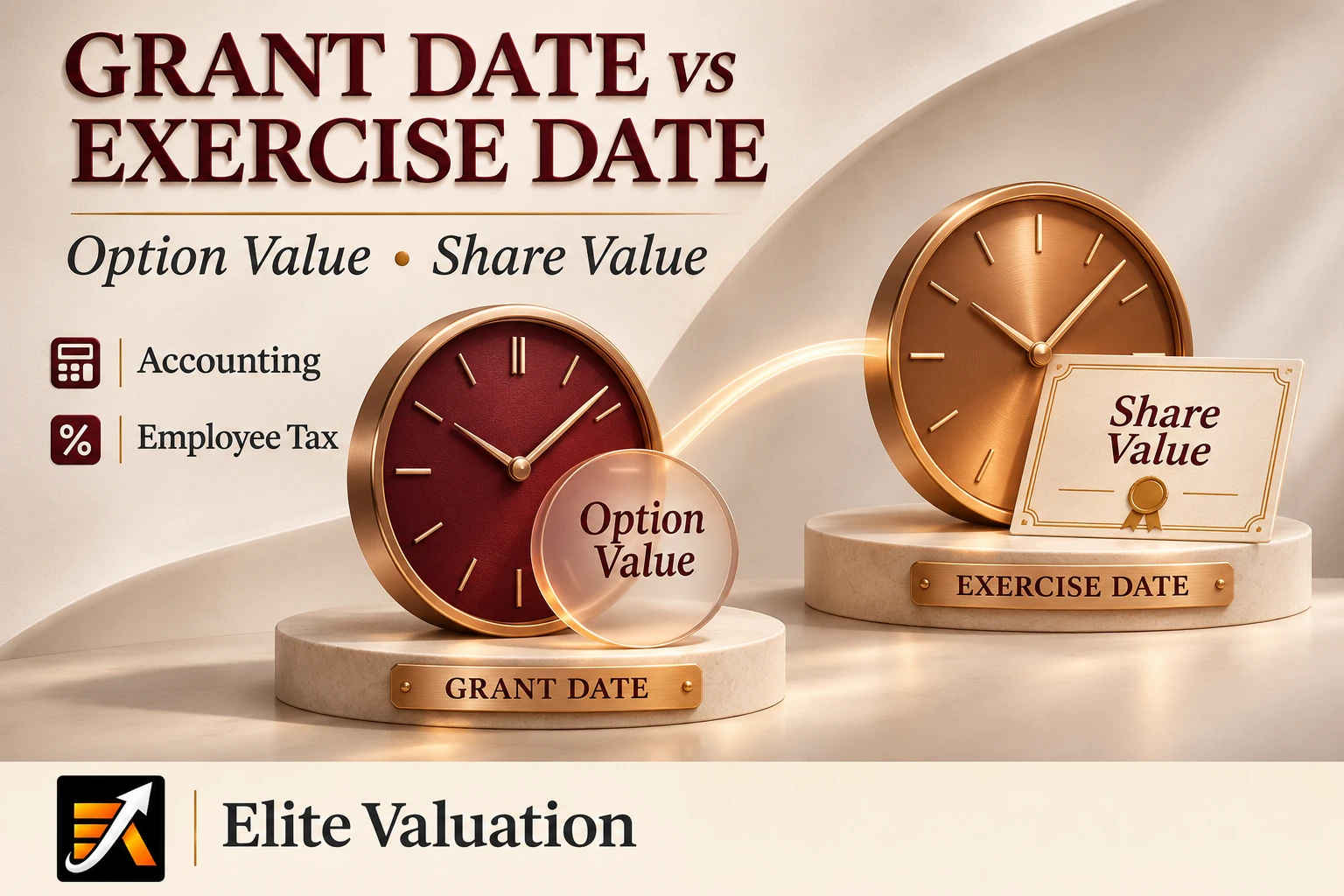
The exercise-date figure matters more than the grant-date price, as Figure 1 shows. The scenario below uses the same grant in each case.
A four-year vesting example
An employee holds 4,000 options with an exercise price of ₹100 per share, equal to the fair market value on the grant date. No options vest before the first anniversary. Then 25 per cent vests on each of the first four anniversaries: 1,000 options each year, fully vested at the fourth anniversary. The exercise scenarios assume all 4,000 options are vested and exercised together; no forfeitures or share changes are assumed. The table shows what happens at exercise under three fair market values.
Perquisite on exercise at three fair market values (hypothetical)
Drawn to scale on the ₹400 case. Figures are hypothetical and do not describe any company or employee.
| Fair market value on the exercise date | Gain per share | Perquisite on exercise, taxed as salary | Cash needed for the exercise price |
|---|---|---|---|
| ₹80 | Nil, below the price | Nil. The employee would not exercise | Not required |
| ₹150 | ₹50 | ₹2,00,000 | ₹4,00,000 |
| ₹400 | ₹300 | ₹12,00,000 | ₹4,00,000 |
Budget for the price and the tax
The TDS on the perquisite is payable through payroll in addition to the exercise price, so the employee must find cash for both. An employee who has not been told this may decide not to exercise, and the grant then delivers no retention value. The table also shows that a fall in value means an option may never be exercised. Employees should hear that before the grant, not after the first exercise window opens.
Give the vesting dates in the letter and repeat them in each vesting statement. Rule 12(6)(a) of the Companies (Share Capital and Debentures) Rules, 2014 requires a minimum period of one year between grant and vesting. A one-year cliff followed by equal annual instalments, as in the scenario, is a common pattern and meets that minimum. The dates in the letter should match the dates in the vesting statement to the day.
How Do You Explain Exercise and Tax Before an Employee Acts?
Give a written exercise statement before the window opens. It shows the exercise price, the fair market value on the exercise date and its basis, the perquisite, the TDS and the cash needed. The perquisite is covered by Section 17(1)(d), measured under Section 17(4)(h) of the Income-tax Act, 2025, and the employer deducts the tax through payroll.
A Pune or Ahmedabad employee who exercises in the same window as a Bengaluru colleague must find the price and the TDS at the same time, so the statement should go out before the window opens.
Exercise is the moment expectation meets a tax bill. On exercise and allotment or transfer of the shares, the employee receives a salary perquisite measured by the prescribed exercise-date fair market value less the price paid. The company deducts TDS through payroll. An employee who has not budgeted for both the price and the tax may choose not to exercise, which wastes the grant.
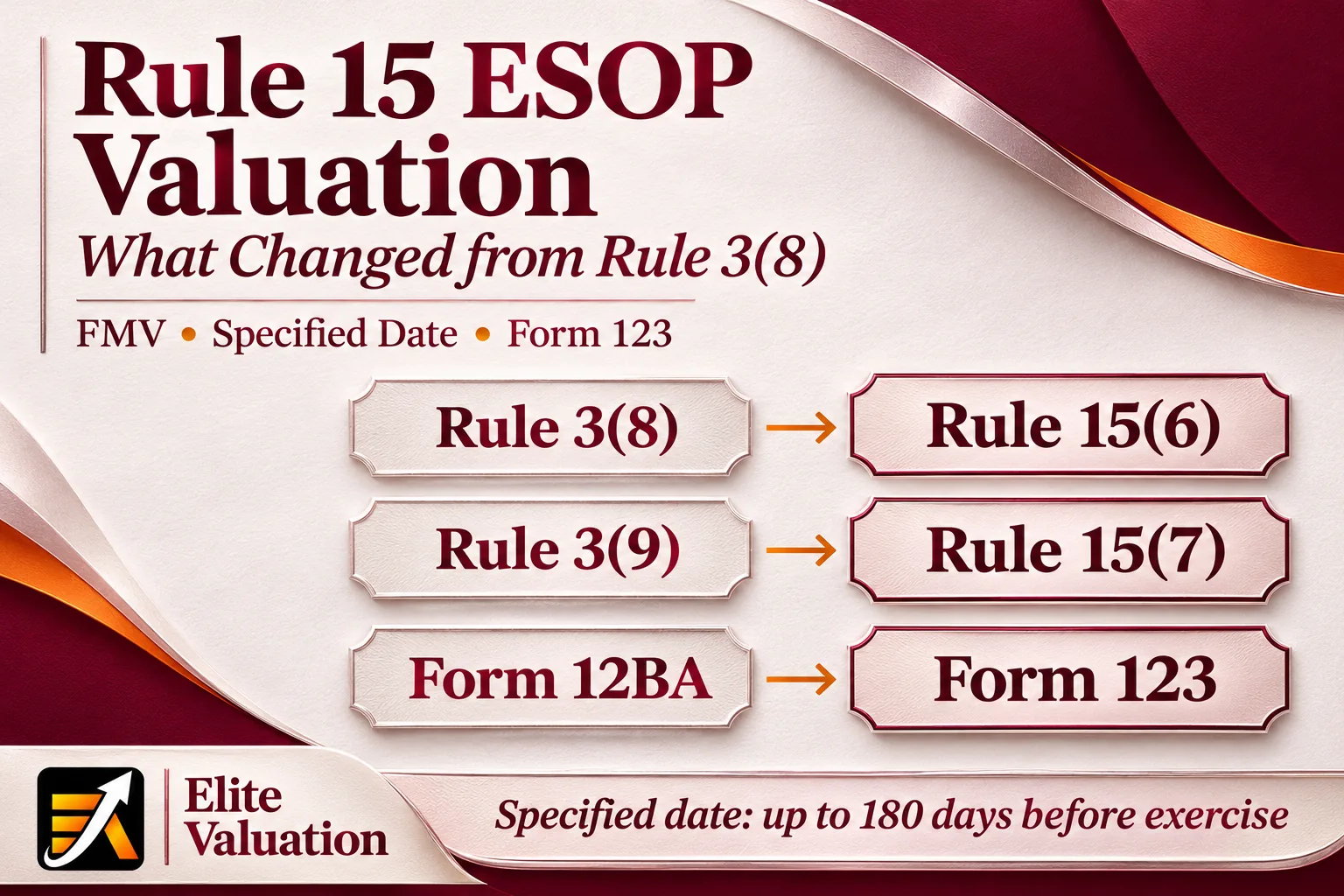
For current periods, Rule 15(6)(d) of the Income-tax Rules, 2026 requires a merchant banker’s determination for unlisted equity shares. Rule 15(8)(g) specifies Category I SEBI registration; Rule 15(8)(l) allows the exercise date or a specified valuation date up to 180 days earlier. Registered-valuer status alone does not replace this requirement.
An eligible startup under Section 140 may use Section 392(3), read with Section 289(3), of the Income-tax Act, 2025. Tax is due within 14 days of the earliest of 60 months from the relevant tax year-end, share sale or cessation of employment with the allotting employer. Recognition alone is insufficient.
Six steps for each exercise
Run every exercise in the same six steps.
- The employee receives the vesting statement and the exercise window in writing.
- The employee submits a signed exercise notice for a stated number of options.
- The company obtains the prescribed exercise-date fair market value, using the required certifier and an eligible specified valuation date.
- Payroll computes the perquisite per share and in total, and the TDS, and tells the employee the cash needed.
- The employee arranges the exercise price and payroll’s required tax funding; any applicable eligible-startup deferral is applied separately. The company confirms receipt and settlement arrangements.
- The shares are allotted, the return of allotment is filed within the period the rules set, the register is updated, and the perquisite statement is issued.
On a later sale, capital gains use the perquisite FMV as the acquisition cost under Section 73(1), Table item 4. The holding period starts on allotment or transfer, not grant. Rates and exemptions depend on the year of sale.
Get the Exercise Figures Right Before the Window Opens
Elite Valuation prepares the fair market value per share that supports the exercise price and the exercise-date figures, subject to confirming the signatory the rules require for each exercise.
Book an Exercise ReviewFair Market Value of Shares | Exercise-Date Figures | Ind AS 102 Schedule | Share Valuation
How Should Leavers, a Sale or an Exit Be Explained?
Explain leaver and exit terms in the grant letter and at the first briefing, not when someone resigns or a buyer appears. State what happens to unvested and vested options on resignation, termination, death or incapacity, a sale of the company and a listing. Do not promise a sale or an IPO.
A leaver in Gurugram, Mumbai or Vadodara should read the same clause, so the wording must not change from one office to another.
Leaver terms are the most emotional part of any scheme, and the easiest to explain badly after the event. An employee who resigns in the second year wants to know what they keep. The scheme and the letter must answer that before anyone resigns, in the same words each time.
- Unvested options: for resignation or termination, Rule 12(8)(f) provides for lapse of unvested options. Explain the applicable scheme terms and statutory employee-event provisions separately.
- Vested options: state the exercise window after leaving in days, not in phrases such as “a reasonable time”.
- Good and bad leaver: if the scheme makes the distinction, define each category and give one example of each.
- Death or permanent incapacity: Rule 12(8)(d) vests options granted up to death in the legal heirs or nominees; Rule 12(8)(e) vests options granted up to permanent incapacity in the employee on that date. Explain the process and required evidence.
- Sale of the company: say whether options vest on a sale, and whether the employee takes the buyer’s terms, sells alongside investors or receives cash.
The proceeds from an exit depend on the buyer’s price, the share class and the deal terms, and nobody knows them when the grant is made. Tell employees that the exit value is unknown at grant, and do not describe a sale as likely, expected or imminent.
Listed-company communications
For a listed company, the SEBI (Share Based Employee Benefits and Sweat Equity) Regulations, 2021 apply. From 2 January 2026, their definition of “valuer” refers to Section 247 of the Companies Act. This does not replace every accounting or tax valuation requirement. Keep the applicable role and report purpose distinct in employee messages.
For a listed company, employee communication must also respect the SEBI (Prohibition of Insider Trading) Regulations, 2015. Do not share unpublished price-sensitive information except as permitted for legitimate purposes, performance of duties or discharge of legal obligations. Route any briefing on a deal, exit or results-linked exercise window through the compliance officer and counsel.
Which Channels and Calendar Keep Employees Informed Each Year?
A fixed calendar works better than occasional updates. Brief at grant, send a vesting statement on each vesting date, hold a briefing before each exercise window, issue an annual ESOP statement with the Board’s report, and brief again at any funding round or sale process.
A company with teams in Bengaluru, Delhi and Ahmedabad should run one calendar with one owner, not three.
Employees forget a grant within months, and they remember the last conversation they had about it. A calendar keeps the messages current and gives HR a fixed agenda. One person should own the calendar each year, and every channel should draw its numbers from one approved source, usually the CFO’s Valuation and payroll file.
Figure 2 places the four stages side by side with the channel that serves each one.
Four stages, four channels
The annual ESOP statement runs across all four stages.
| Event | Channel | Owner | Content |
|---|---|---|---|
| Grant | One-to-one, then grant letter and summary | HR, with the manager | Terms, dates, leaver and exit rules |
| Each vesting date | Vesting statement by email, with a copy on the portal | HR | Vested, unvested and the next vesting date |
| Before an exercise window | Group briefing and exercise statement | CFO, with payroll | Exercise price, fair market value, perquisite, TDS and cash needed |
| Annual | ESOP statement with the Board’s report | Company secretary | Granted, vested, exercised, lapsed and outstanding |
| Funding round or sale process | Founder briefing, followed by a written note | Founder, with counsel | What changes for options, and what is still unknown |
| Leaving | Exit letter and leaver statement | HR, with the company secretary | Vested and unvested options, the window and the tax position |
Use plain words. A statement that reads like a board paper will be filed unread. Keep each statement to one page, put the figures in a table, and add one sentence on what changed since the last statement.
What Should Managers Say to the Hard ESOP Questions?
Give each answer with its assumption attached: the date, the basis, the signatory and the condition. Managers refer the numbers to the CFO and the terms to HR, and they never estimate a sale price or an exit date.
A manager in Delhi, a manager in Mumbai and a manager in Pune should give the same answer to the same question.
Managers are the first point of contact and often the least briefed. Give them a short script bank that answers the six questions employees ask most. The answers are written to be read aloud. Each carries its assumption, so a later change in the facts does not turn an earlier answer into a broken promise.
Six manager answers to use
| Question | Answer to give | Avoid |
|---|---|---|
| What are my options worth? | “The current intrinsic spread is the positive difference between the share FMV and the exercise price. It is not the option’s full fair value or a promised cash payout. Use the dated Valuation statement and explain that figures can change.” | Multiplying the options by the funding Valuation |
| When can I sell? | “Shares become yours on allotment, after you exercise. Whether and when you can sell depends on the company’s share transfer rules and on any sale or listing. We cannot give you a date.” | Promising a sale, a buyback or a listing date |
| What tax will I pay? | “The exercise-related benefit is generally salary income. A later sale has a separate capital-gains calculation using the FMV already taken into account for the perquisite as cost. Payroll will explain the figures and any applicable deferral.” | Quoting a rate from memory |
| What happens if I leave? | “Read the scheme and grant letter for your event. Resignation or termination normally lapses unvested options; vested options have the stated exercise window. Death and permanent incapacity have different statutory treatment.” | Saying “you keep everything” or “it depends” |
| Why this price? | “This is the price set for your grant under the scheme. Where it is based on grant-date share FMV, we will explain the dated Valuation supporting it. The exercise price is not required to equal share FMV in every scheme.” | Calling it a discount without the basis |
| Is it guaranteed? | “No. The options depend on the vesting conditions, on continued service, and on a future value that nobody can promise.” | Saying the options are as good as cash or safe |
Prepare Managers Before the Questions Arrive
Elite Valuation supplies the figures, the Valuation date and the basis that managers need to answer value and tax questions consistently across the team.
Contact Elite ValuationESOP Advisory | Valuation Basis | Pool and Dilution Modelling | Ind AS 102 Schedule
Where Do ESOP Communications Go Wrong? Common Mistakes and Fixes
These seven errors recur in first and later schemes. Each card gives the effect of the mistake and the fix, in order of how much damage it usually causes.
The fixes are the same whether the company is in Gurugram, Ahmedabad or Pune, because the errors come from the process, not from the city.
Presenting the option as a bonus
The grant is described as a reward of a fixed sum, with no mention of the price, the vesting or the tax.
Employees expect a payout the scheme does not promise, and trust falls at the first exerciseDescribe the option as a right to buy one share at a stated price after vesting, and show the vesting dates in the letter.
Quoting the funding Valuation as the value of the options
A headline company Valuation from a funding round is multiplied by the number of options.
The arithmetic ignores share class, preference rights and dilution, and the employee later feels misledShow the fair market value per share from the latest Valuation, with the share class and the date, and explain the difference from the investors’ price.
Announcing grants before the approvals are on record
Grant letters go out after a conversation but before the board resolution or the special resolution.
The grant rests on an approval that does not yet exist, and it may have to be redoneConfirm that the board resolution and the special resolution are on record, then issue the letter with its date.
Leaving the tax to the exercise date
The exercise is processed with no statement of the perquisite, the TDS or the cash needed.
The employee meets an unexpected deduction, may not exercise or disputes it, and the company faces a TDS shortfallIssue the exercise statement before the window opens, with the perquisite, the TDS and the cash needed, signed off by the CFO.
Changing terms without written notice
Vesting dates or the exercise window are changed in an email or a meeting, with no written notice to the employee.
The employee can dispute the new terms, and the change may need approvals the scheme requiresMake every change in writing, obtain the approvals the scheme requires, and send a revised grant letter with a summary of what changed.
Sharing price-sensitive information with a listed company’s employees
A briefing on an exit, a deal or an exercise window tied to results reaches a wide group before it is published.
The disclosure may breach the insider trading rules and expose the company and the people who spokeRoute briefings through the compliance officer and counsel; share unpublished price-sensitive information only for a permitted legitimate purpose, performance of duties or discharge of legal obligations.
Using last year’s Valuation in this year’s statement
The annual statement quotes a fair market value from a Valuation date that is out of date.
The employee relies on a figure that no longer reflects the company, and the statement conflicts with the accountsPrint the Valuation date beside every per-share figure, and refresh the figure whenever the Valuation is refreshed.
Where Elite Valuation fits in
Elite Valuation is an independent Valuation firm founded in 2020 by Sagar Shah, a Chartered Accountant, Company Secretary and IBBI Registered Valuer, with an Ex-Ernst & Young background in cross-border structuring and transfer pricing. The firm supports ESOP communication on the numbers side. The legal drafting of the scheme and the filings stays with the company’s counsel and company secretary.
- ESOP advisory: scheme design, pool modelling and review of the grant letter, at ESOP advisory services
- Share Valuation: the fair market value per share that supports the exercise price and the exercise-date figures, at share Valuation in India
- Contact: share the scheme, the cap table and the planned grants, at the contact page
- About: the founder’s credentials and the firm, at the about page
Closing Summary: What Must Employees Hear, and in What Order?
An ESOP is communicated in the order the employee experiences it: the grant, the vesting, the exercise, and the exit or the departure. At each stage the employee needs the right, the price, the dates, the cash and the tax, in writing and in words. The numbers should come from one approved source, the terms should match the scheme and the register, and the assumptions should travel with every figure.
The same sequence applies whether the company is based in Mumbai, Bengaluru or Vadodara, and a team in Delhi or Pune should follow it in the same order.
Three steps do most of the work. Issue the letter only after the approvals are on record. Explain the perquisite and the TDS before the exercise window opens. And give every per-share figure its Valuation date and its basis. A company that does these three things will have fewer disputes than one with a generous scheme and a thin explanation.
Frequently Asked Questions About Communicating an ESOP in India
What should a company tell employees before the first ESOP grant?
Before the first grant, employees should hear what the scheme is for, who is eligible, how grants are decided, the vesting and exercise rules, and the fact that an option is a right to buy shares at a price rather than a payment. The company should also explain that the value depends on a future fair market value and a future sale. The scheme summary should be ready before the first conversation. The grant letter should follow only after the board resolution and the special resolution under Section 62(1)(b) of the Companies Act, 2013 are on record.
Does an employee need a written grant letter for an ESOP in India?
A written grant letter is the document an employee relies on, so the company should issue one for every grant. The letter should state the number of options, the grant date, the exercise price, the vesting dates, the exercise window, the leaver and sale terms, and any amount payable at grant with its refund if the option does not vest. The letter should match the company’s Register of Employee Stock Options in Form SH-6, which Rule 12(10) of the Companies (Share Capital and Debentures) Rules, 2014 requires the company to keep.
Should the company tell employees what their options are worth?
The company should explain how the value is calculated and give the latest fair market value per share with its Valuation date. It should not present a figure as the amount an employee will receive. The positive exercise-date FMV less the exercise price is an intrinsic spread, not the full option fair value or a promised cash payout. Tax on the perquisite is a further cash cost on exercise, and the sale proceeds depend on a future sale that may never happen. A range of illustrative values, labelled as hypothetical, helps employees see the sensitivity without creating a promise.
When is tax payable on an ESOP in India?
Grant and vesting generally do not create employee tax. Exercise and allotment or transfer create a salary perquisite, measured using the prescribed exercise-date FMV less the price paid. A later sale is a separate capital-gains event. Payroll should explain tax funding before exercise and separately test any eligible-startup payment deferral.
Who deducts TDS on the exercise perquisite?
The employer handles salary TDS under Section 392 and explains the perquisite, withholding and cash needed before exercise. Issue the applicable payroll statement: Form 123 where Rule 204(2) requires it, otherwise the prescribed particulars in Form 130. Apply eligible-startup deferral only when its conditions are met.
What happens to unvested options when an employee leaves?
On resignation or termination, Rule 12(8)(f) provides for unvested options to lapse, with vested options exercisable within the scheme’s period. Death and permanent incapacity have separate statutory vesting provisions under Rule 12(8)(d) and (e). Explain each event in the grant letter; a general good-leaver/bad-leaver label does not replace those rules.
Can a company promise employees a value on a sale or an IPO?
No. A company cannot promise a sale price, an exit date or a listing. The value at exit depends on the buyer’s terms, the share class, the investors’ rights and the market at the time. Where a sale or listing is planned, the scheme’s acceleration terms should be explained as rules, not as a forecast. For a listed company, any statement about a future price or an exit must also be reviewed under the insider trading rules before it is made to employees.
How often should employees receive an ESOP statement?
At a minimum, employees should receive a vesting statement on each vesting date and an annual statement each year. The annual figures should match the company’s register and the disclosure the Board’s report must carry under Rule 12(9). A statement before each exercise window is also good practice. Each statement should show the options granted, vested, exercised, lapsed and outstanding, with the Valuation date beside any per-share figure, and it should be signed off by the CFO or the company secretary.
Who should explain the ESOP to employees?
Three roles share the job. The founder explains why the scheme exists and what the company expects in return. HR and the company secretary explain the documents, the dates and the leaver terms. The CFO, or the person who owns the Valuation figures, answers questions on value and tax, because only the owner of the numbers should quote them. Managers can describe the role and the contribution, but they should refer questions on terms and numbers to those three roles.
Must the Valuation of the shares be shared with employees?
A plain-language summary should give the relevant per-share FMV, its date and basis, while respecting confidentiality. The full report can contain sensitive assumptions and business information. Decide access under the applicable scheme, disclosure requirements and company policy with counsel; do not treat a communication summary as a substitute for mandatory disclosures.
What changes for employees of a listed company?
For a listed company, the SEBI (Share Based Employee Benefits and Sweat Equity) Regulations, 2021 apply. From 2 January 2026, their definition of “valuer” refers to Section 247 of the Companies Act. This does not replace every accounting or tax valuation requirement. Keep the applicable role and report purpose distinct in employee messages. Follow the insider-trading controls as well, including lawful handling of unpublished price-sensitive information.
Can grants in the same scheme carry different exercise prices?
Yes, where the scheme and approvals allow it. State the price-setting basis for each grant. If the scheme uses grant-date share FMV, explain how dates and share rights affect the price. Other compliant price-setting methods may be used, so do not imply that every exercise price must equal FMV.
Who prepares the Valuation figures behind an ESOP communication?
Elite Valuation is an independent Valuation firm founded in 2020 by Sagar Shah, a Chartered Accountant, Company Secretary and IBBI Registered Valuer, with an Ex-Ernst & Young background. The firm prepares the fair market value per share and the exercise-date figures that support the grant letter and the statements, and the basis is reviewed with the company’s counsel and company secretary. For unlisted equity perquisite FMV, the Category I SEBI-registered merchant banker requirement applies; registered-valuer status alone is insufficient. The firm’s role on any exercise-date certificate is confirmed for each engagement.
Do start-ups get a tax deferral on ESOP exercise in India?
Only eligible startups meeting the statutory conditions can use the payment deferral described in the exercise-and-tax section. It postpones payment, not the measurement of the exercise-related benefit. Recognition alone does not establish eligibility; payroll must record the relevant deadlines and earlier triggering events.
How does an independent Valuation firm compare with a Big-4 firm for ESOP work?
Both kinds of firm can prepare ESOP Valuation work, and the right choice depends on the scope, the signatory, the fee and the team that will answer employee questions. A Big-4 firm brings a large network and global reach. An independent firm can offer a named partner and focused ESOP and registered valuer work. Before you decide, ask each firm which person will sign the report, which credential that person holds, and what the report will cover at grant and at exercise.
Sources
- Companies (Share Capital and Debentures) Rules, 2014: Rule 12 on scheme terms, employee events and records.
- Income-tax Act, 2025, as amended in 2026: employee perquisites, share cost and eligible-startup tax payment.
- Income-tax Rules, 2026: Rule 15 on share FMV and Rule 204 on payroll perquisite statements.
- SEBI SBEB and Sweat Equity Regulations, 2021: listed-company schemes and current valuer definition.
- SEBI: November 2026 FAQs on the Prohibition of Insider Trading Regulations, 2015.
Set the ESOP Communication Right From the Start
Elite Valuation supports the figures behind every letter, statement and briefing, so that the scheme, the register and the accounts all tell one consistent story.
Book an ESOP Communication ReviewESOP Advisory | Fair Market Value of Shares | Ind AS 102 Schedule | Exercise-Date Figures

Disclaimer. This article is general information only. It is not legal, tax, accounting or investment advice, and it is not a Valuation of any company, share or grant. The illustrations are hypothetical. Treatment depends on applicable law, scheme terms and individual circumstances. Obtain advice from a qualified professional for your situation.