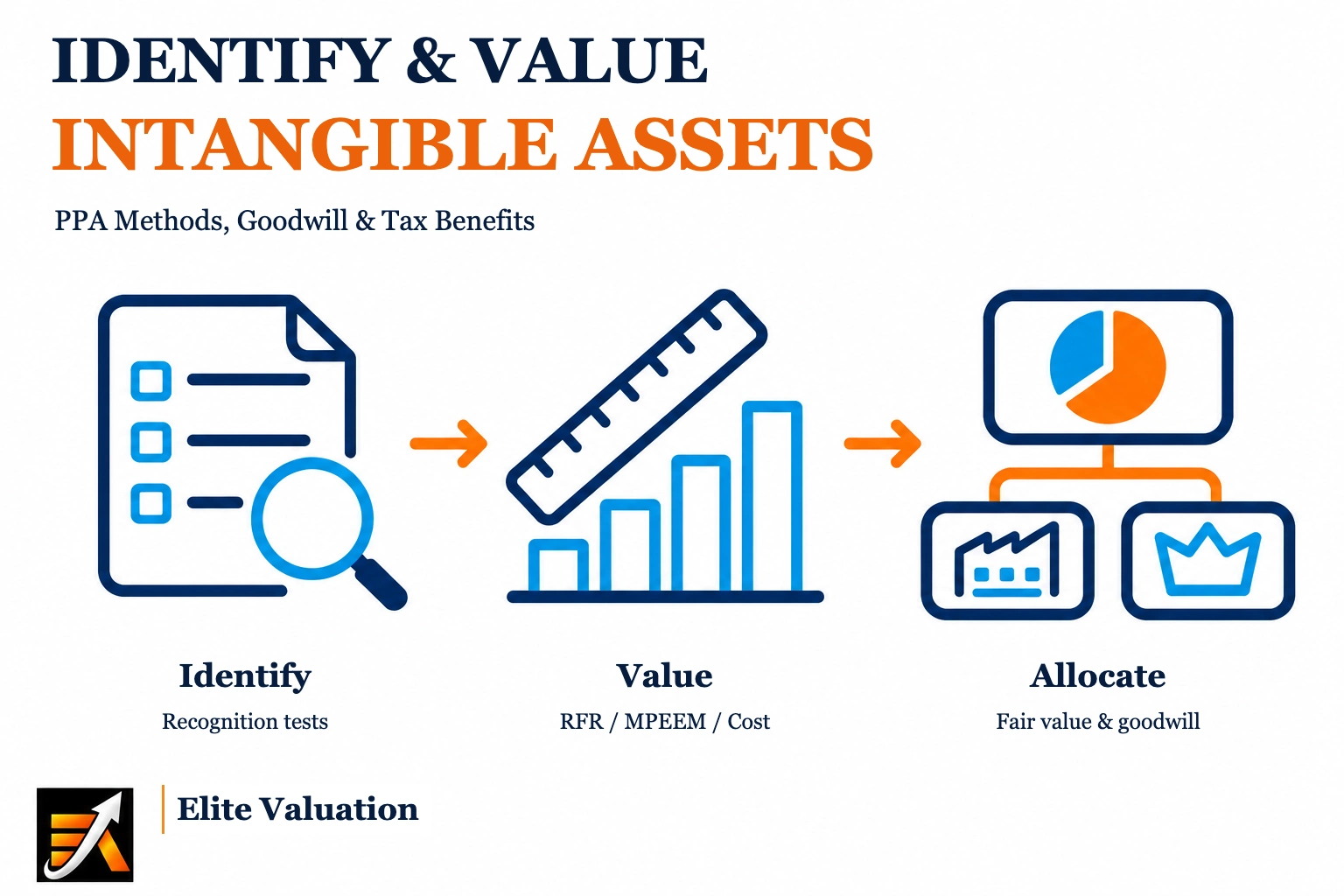
Purchase price allocation is where the price of a business is split between identifiable assets and goodwill. For an acquirer in India, the intangibles are usually the largest judgement, the number an auditor tests first and the figure a tax officer may later question. This guide sets out the identification tests, the categories that matter, the standard methods, and the role of the tax amortisation benefit, with the checks that keep the numbers defensible.
Key takeaways
- Identify before you value. An intangible is recognised apart from goodwill only if it passes the contractual-legal test or the separability test under Ind AS 103.
- A customer relationship with no signed contract can still qualify, but only if the business has a practice of contracting with customers or there is evidence of exchange transactions for similar relationships.
- The assembled workforce is not a separate intangible. Its cost is used as a contributory charge when other intangibles are measured, and its value otherwise sits in goodwill.
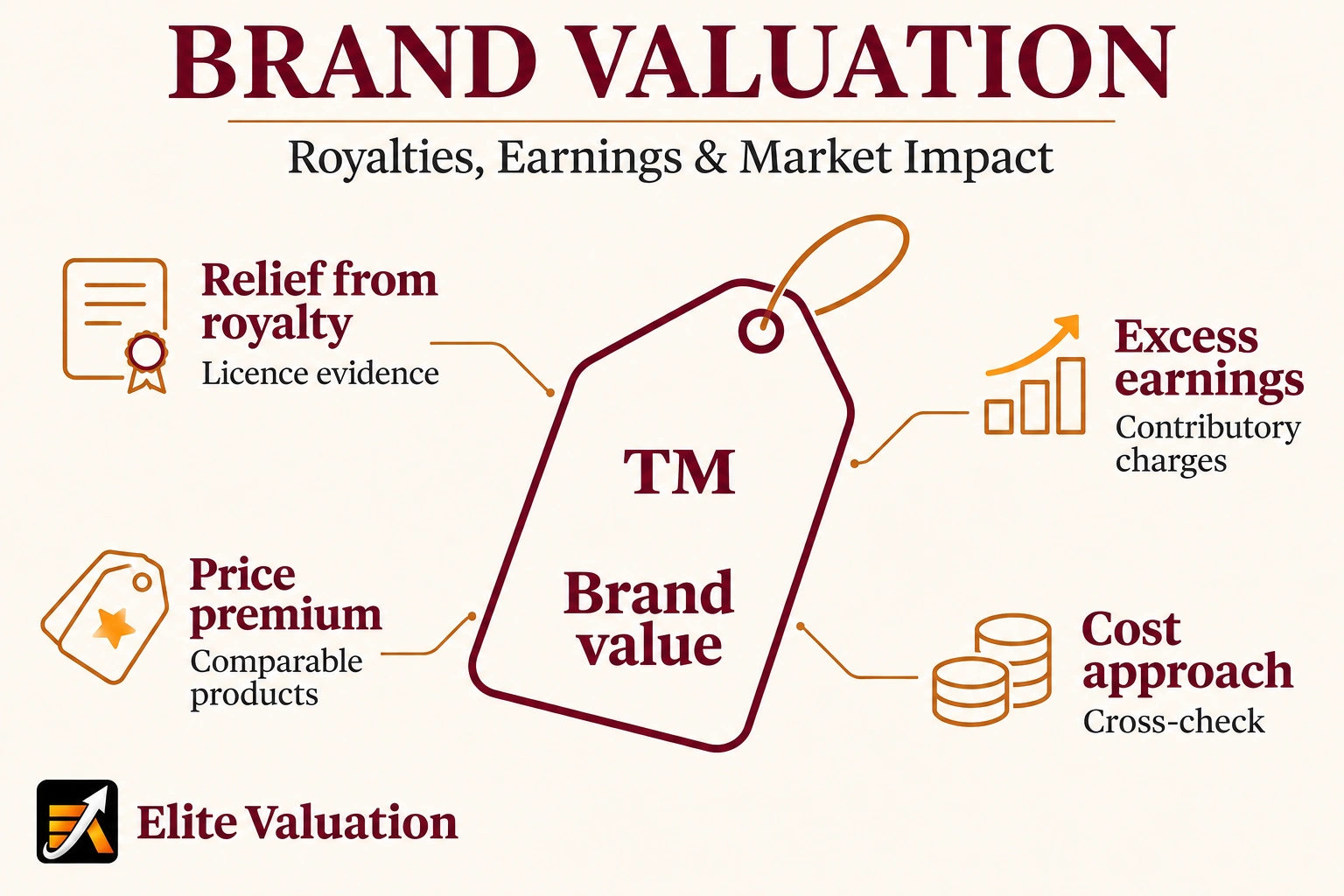
- Relief from royalty suits brands, trade names and patents. MPEEM suits customer relationships, after contributory asset charges are deducted.
- Attrition and useful life often move the answer more than the discount rate. Model both from cohort data rather than from the contract term.
- The tax amortisation benefit applies only where the buyer takes a tax basis step-up, usually in an asset purchase, and only for intangibles the tax law allows to be depreciated. Goodwill has not been depreciable since 1 April 2021.
- A bargain purchase gain under Ind AS 103 is not taken to profit or loss. After reassessment, it goes to other comprehensive income and is accumulated as a capital reserve.
This guide is for acquirers, sellers preparing a deal, CFOs and audit committees, and the Company Secretaries and tax advisers who review purchase price allocations. It works alongside our guides on company Valuation and share Valuation, and where the target has granted employee options, the treatment is covered in our ESOP advisory work.
Why Intangible Asset Valuation is the Hardest Part of PPA
In a purchase price allocation, each identifiable asset is measured at fair value on the acquisition date, and the residual of the consideration becomes goodwill. Intangibles are the hardest part because they have no market price, often do not appear in the target’s books, and need several judgements before a number exists.
Under Ind AS 103, the acquirer measures the identifiable assets it acquires at acquisition-date fair value. Tangible assets are comparatively easy to test, because they have a book value, a replacement cost or a secondary market. Intangibles work differently. Their value depends on the cash flows a customer base, a brand or a technology is expected to produce, and those cash flows must be forecast, risk-adjusted and discounted.
Three features make the work hard. The target often never recorded the asset, because customer relationships and in-house software were expensed as they were built, so the acquirer may have to recognise something that never appeared in the target’s accounts. Identification also requires a reading of the deal documents, contracts and legal rights, not only the balance sheet. And each intangible has its own life, risk and method, so one approach rarely fits the whole group. An EY study of purchase price allocation in India, published in January 2026, reports that the split between identified intangibles and goodwill varies considerably from industry to industry, which is a reason not to shortcut the judgement.
The Shift from Book Value to Fair Value in Knowledge Economies
Many Indian targets in software, pharma, financial technology and professional services carry modest tangible assets but substantial earning power. Their book value captures the offices, servers and receivables. The premium the buyer paid is usually for the people, the customers, the brand and the code, and those items are largely absent from the balance sheet. Ind AS 103 moves that value from book value toward fair value, so the acquirer may recognise a larger intangible balance and a smaller goodwill figure than the headline deal size suggests.
The shift changes what the auditor reviews. The question is no longer whether the purchase price was reasonable, but whether each part of it can be traced to an identifiable asset, a method, an input and a life. A schedule that cannot show that trail is the most common reason a purchase price allocation is reopened.
Categories of Identifiable Intangible Assets under Ind AS 38
An intangible is identifiable when it arises from a contractual or other legal right, or when it can be separated from the business and sold, transferred, licensed, rented or exchanged. Ind AS 103 applies the same two tests to acquired intangibles and gives illustrative categories in its application guidance.
The test is applied asset by asset. The contractual-legal test asks whether the asset comes from a contract or a legal right, such as a registered trademark, a granted patent, a licence or a non-compete agreement. The separability test asks whether the asset could be sold, licensed or exchanged apart from the business. Whether the buyer intends to sell the asset does not change the result. The question is capability, not plans.
Identification test under Ind AS 103 and Ind AS 38
Customer-Related Intangibles (Backlogs, Customer Relationships)
Customer-related intangibles include order and production backlog, signed customer contracts and the relationships that sit behind them. Backlog and signed contracts meet the contractual-legal test on the acquisition date, because the rights exist in writing. A customer relationship without a signed contract is more demanding. It can still meet the contractual-legal test if the target has a practice of entering contracts with its customers, even where no contract was in force on the acquisition date. If there is no such practice, the relationship is recognised only if it is separable.
For a separable non-contractual relationship, the standard looks for evidence of exchange transactions for the same or similar relationships, and such transactions can be infrequent. A customer list is separable only if confidentiality terms, agreements or the law do not prohibit its sale, lease or exchange. In practice, the valuer should ask for the purchase history by customer, the renewal and attrition record, the contract terms, and whether the target has ever sold or assigned a customer list. Those facts decide the category before any number is calculated.
Marketing-Related Intangibles (Trademarks, Trade Names, Domains)
Marketing-related intangibles include trademarks, trade names, service marks and internet domain names. A registered trademark or a registered domain name meets the contractual-legal test, because the legal title exists and can be enforced. An unregistered trade name is recognised only if it is separable, which in practice means it could be sold or licensed apart from the business. The valuer should therefore check the title position, the use history and any licence agreements before deciding whether the name stands alone.
Non-compete agreements signed with selling shareholders or key managers are contract-based intangibles. They are often valued separately because they protect the acquired business for a stated period, and their life is set by the contract. A non-compete should be tested against the enforceability rules that apply to the agreement, because a clause that cannot be enforced will not support a separate value.
Technology-Based Intangibles (Proprietary Software, Unpatented Tech)
Technology-based intangibles include patented technology, registered designs, copyrighted software, databases and trade secrets such as proprietary processes and unpatented know-how. Patents, registered designs and copyright meet the contractual-legal test. Unpatented technology and trade secrets are recognised when they are separable, meaning they can be licensed or sold, or when a contract or confidentiality agreement gives the target a legal right over them. Know-how that cannot be protected or separated is not recognised, and its value falls into goodwill.
For software, the valuer should separate the code, the platform and the underlying know-how, because each may have a different life, a different owner and a different value. A proprietary codebase that a customer can rebuild in a year is worth less than the team and the know-how that produced it, and the Valuation method should follow that distinction rather than treat the software as one asset.
Struggling to Separate Your Target’s IP From General Goodwill?
Partner with Elite Valuation for precise intangible asset identification, with the test applied to each asset and the evidence kept on file.
Talk to a Registered ValuerIntangible Asset Identification | Purchase Price Allocation | Ind AS 103 Advisory
Standard Valuation Methodologies for PPA Intangibles
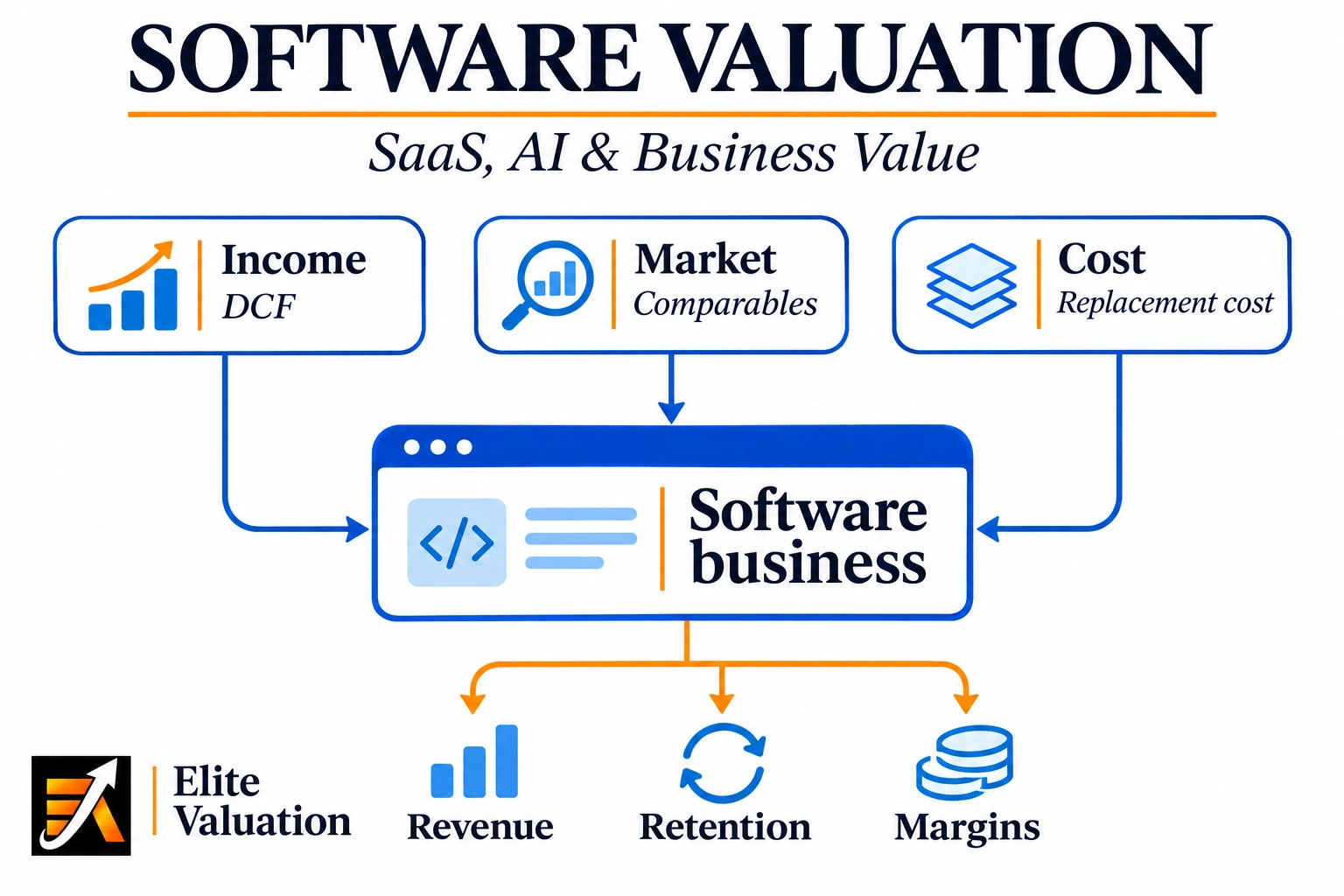
The market, income and cost approaches all apply to intangibles. For PPA work, most intangibles are valued with an income approach, namely relief from royalty or multi-period excess earnings, while the cost approach measures the assembled workforce and the contributory assets. ICAI Valuation Standard 302 and IVS 210 set out the framework.
ICAI Valuation Standard 302 on intangible assets and the international standard IVS 210 both describe the market, income and cost approaches for these assets. Market approaches need comparable transactions, which are seldom public for the intangibles of a private target, so they are normally a cross-check rather than the primary method. The choice of method follows the economics of the asset: what it earns, what a licence would cost, or what it would cost to rebuild.
Relief-from-Royalty (RFR) Method for Brands and Patents
The relief-from-royalty method values an asset as the royalty the owner avoids by owning it rather than licensing it from a third party. The steps are to estimate the revenue the asset drives, choose a royalty rate, deduct tax to get an after-tax royalty saving, project that saving over the remaining useful life, and discount it at a rate that reflects the asset’s risk. For a brand or trade name, the royalty base is the revenue the name supports. For a patent, the base is the revenue of the patented feature, not the revenue of the whole product.
Royalty rates should come from licence agreements for similar technology or brands, from databases that disclose their terms, and from the target’s own licences. Each rate must then be tested against the profit the asset earns. A rate that looks modest on revenue can absorb most of the profit once it is measured against the margin, and that test is often what separates a defensible royalty from an optimistic one.
Example 1 (illustrative)
A target earns ₹150 crore from a product line, and its trade name drives 40 per cent of that revenue, or ₹60 crore. A royalty of 2 per cent gives a pre-tax saving of ₹1.2 crore and an after-tax saving of about ₹0.90 crore at a 25.17 per cent tax rate. With the saving growing at 4 per cent a year in perpetuity and discounted at 15 per cent, the trade name is worth about ₹8.16 crore. Using the full ₹150 crore as the base would give about ₹20.41 crore, roughly 2.5 times the value the revenue supports.
Multi-Period Excess Earnings Method (MPEEM) for Customer Contracts
The multi-period excess earnings method values an intangible as the cash flow the business earns from it, after deducting a charge for every other asset that contributes to that cash flow. Those charges are the contributory asset charges, covering the workforce, the technology, the trade name, working capital and fixed assets. What remains is the excess earnings attributable to the customer base. The excess earnings are projected over the period the customers are expected to stay, adjusted for attrition, and discounted at a rate that reflects the risk of a customer intangible.
- Project revenue from the existing customer base, using cohort data for repeat purchases, renewals and attrition.
- Apply the operating margin to get an after-tax operating cash profit for each year.
- Deduct contributory asset charges, each at a return that reflects that asset’s risk, including the workforce.
- Limit the projection to the expected life of the customer relationship, which should come from the retention curve.
- Discount the excess earnings, and add the tax amortisation benefit only where the conditions in the TAB section are met.
The model is only as good as its inputs, and the two that move the answer most are attrition and the contributory charges. The figure below shows how the illustrative customer relationship in Example 2 changes when either input is wrong.
Example 2 (illustrative)
A target has existing customers generating ₹100 crore in year one. Attrition is 15 per cent a year, and the customer base is projected for eight years. The EBITDA margin is 20 per cent of revenue, and the contributory asset charges are ₹2.0 crore after tax in year one, falling with the customer base. At a 14 per cent discount rate, the customer relationship is worth about ₹40.44 crore before any tax amortisation benefit.
Customer relationship value under three model choices (₹ crore)
Holding revenue flat for eight years is the error that inflates the value most, because it keeps earnings coming from customers who have already left. Attrition should come from the target’s own retention data by customer cohort, and the life should stop where that curve reaches a level the business would not treat as a relationship.
Cost Approach for Assembled Workforce
An assembled workforce is the trained team in place at the acquisition date. Under Ind AS 38 the assembled workforce is not recognised as an intangible asset, and under Ind AS 103 it does not meet the identifiability tests, so its value sits in goodwill. The valuer still needs a figure for it, because the MPEEM model must charge for the team’s contribution to the customer cash flows. The cost approach supplies that figure: the cost to recruit, onboard and bring the team to its current productivity, measured at current prices.
Example 3 (illustrative)
A software services target has 120 engineers. The cost to recruit, onboard and ramp each engineer to current productivity is estimated at ₹6 lakh per head, or ₹7.2 crore in total. That ₹7.2 crore is the base for the workforce charge in the MPEEM model. It is not presented as a separate intangible in the purchase price allocation, and the amount remains part of goodwill.
The Role of the Tax Amortisation Benefit (TAB)
The tax amortisation benefit is the present value of tax deductions on the purchase price of an asset. It arises only where the buyer takes a tax basis step-up, which is usually an asset purchase, a slump sale or an itemised purchase, not a share purchase. Where it applies, it increases the fair value of the identified intangibles and reduces goodwill by the same amount.
Tax basis in share and asset purchases
In a share purchase, the target keeps its historical tax base. The buyer inherits the target’s depreciation position, and the price paid for the shares creates no new deduction for the target’s assets. An asset purchase, a slump sale or an itemised purchase gives the buyer a cost base equal to the price allocated, which creates new deductions. Under the Income-tax Act, 1961, section 32(1)(ii) allows depreciation on specified intangibles such as know-how, patents, trademarks, copyrights, licences and franchises, and other business or commercial rights of a similar nature, on a block written-down value. The rate commonly cited for the intangible block is 25 per cent.
Goodwill of a business or profession was taken out of the depreciable base by the Finance Act, 2021, with effect from 1 April 2021. The Income-tax Act, 2025, effective 1 April 2026, carries the depreciation regime forward and, according to commentary, excludes goodwill of a business or profession from the intangible limb. The official text places the depreciation provision in section 33 of the 2025 Act, but some commentary cites a different section, so the section number and the block rate must be confirmed against the notified text before any tax benefit is modelled.
Ind AS 12 then governs the accounting. In a share deal, where the fair value of an intangible exceeds its tax base, a deferred tax liability is recognised as part of the identifiable net assets and the goodwill rises. The deferred tax position therefore differs by deal structure, and the PPA schedule should show which treatment applies.
How TAB Increases the Fair Value of Identifiable Intangibles
The gross-up is simple. Let V0 be the fair value before any tax deduction, t the tax rate, and AF the present value of tax depreciation per rupee of tax basis at the discount rate. The fair value with TAB is V0 divided by (1 minus t times AF). For an intangible block written down at rate d and discounted at rate r, AF equals d divided by (r plus d), on the assumption that the block continues without disposals. The gross-up raises the intangible value, and because the total consideration is fixed, goodwill falls by the same amount.
Example 4 (illustrative)
Assume an asset purchase in which the fair value before TAB is ₹100 crore, the tax rate is 25.17 per cent, the intangible block is written down at 25 per cent and the discount rate is 15 per cent. AF equals 0.25 divided by 0.40, or 0.625, so t times AF is about 0.157. The fair value with TAB is 100 divided by 0.843, or about ₹118.67 crore. TAB adds about ₹18.67 crore, roughly 18.7 per cent, and goodwill falls by the same amount.
Asset purchase: fair value before and after TAB (₹ crore)
Four conditions should hold before a TAB is included in any fair value. The acquisition must give the buyer a tax basis step-up. Each intangible must be one the tax law lets the buyer depreciate, and goodwill is not one. The buyer, or a typical market participant, must have taxable profits to absorb the deductions. And the TAB must reflect the deductions a market participant could claim on that asset, not a benefit that exists only because of the buyer’s own structure. Auditors test each of these conditions, so the working should record them.
Need Robust, Mathematically Sound Valuation Models for MPEEM or RFR?
Elite Valuation provides Big-4 level technical modelling for MPEEM and relief from royalty, with the assumptions, sensitivities and reconciliation to the purchase price that an auditor will ask for.
Discuss Your MPEEM or RFR ModelMPEEM | Relief From Royalty | Purchase Price Allocation | Ind AS Advisory
Where Do PPA Intangible Valuations Go Wrong? Six Common Mistakes and Their Fixes
These six errors appear most often when an intangible schedule is reviewed by an auditor, a tax officer or a lender. Each card gives the cost of the error and the fix, in order of the damage it usually causes.
Recognising the assembled workforce as a separate intangible
The trained team is shown as its own asset because it is valuable and expensive to replace.
Ind AS 103 keeps the value in goodwill, so the audit adjusts the scheduleUse the workforce cost only as a contributory charge, and leave its value inside goodwill.
Recognising a customer relationship with no contract or exchange evidence
Recurring revenue is treated as an identifiable asset without testing whether the relationship is contractual or separable.
The asset fails the identifiability test, so goodwill rises on reviewDocument the contracting practice or the exchange transactions before the relationship is recognised.
Running MPEEM without contributory asset charges
All operating profit is credited to the customer base, although the workforce, technology and trade name also earn part of it.
In Example 2, leaving out the charges overstates the value by about 15 per centDeduct a return on each contributory asset, and show every charge as a separate line in the model.
Holding revenue flat through the useful life
Attrition is left out, so the model assumes that customers who have already left keep paying.
In Example 2, ignoring attrition overstates the value by about 56 per centBuild attrition from cohort data, and set the life from the observed retention curve.
Applying TAB in a share purchase or to goodwill
A tax deduction is added to the intangibles in a share deal, where the tax base has not stepped up, or to goodwill, which the tax law excludes.
The intangible value is overstated, the deferred tax is missed and the claim is rejected on reviewInclude TAB only for an asset-based purchase, and only for intangibles the tax law allows the buyer to depreciate.
Charging the royalty on total revenue or using one discount rate for every asset
The royalty is applied to the whole product line, and a single rate is used for a trade name, a patent and a customer base.
In Example 1, using the full base overstates the trade name by about 2.5 timesApply the royalty to the revenue the asset drives, and build each discount rate from its own risk premium.
How Elite Valuation Supports PPA Intangible Engagements
Elite Valuation is a Valuation firm founded in 2020 by Sagar Shah, a Chartered Accountant, Company Secretary and IBBI Registered Valuer. Before founding the firm, he was at Ernst & Young, focused on cross-border structuring and transfer pricing. A purchase price allocation is organised around the deliverables below, so that the schedule, the audit file and the tax position use the same inputs.
| Need | What the engagement delivers |
|---|---|
| Identification memo | Each candidate intangible mapped to the contractual-legal or separability test, with the evidence on file |
| Fair value of identified intangibles | Relief from royalty, MPEEM or cost approach support, with stated inputs and sensitivities |
| Tax and deferred tax position | TAB analysis for asset-based deals, and the deferred tax effect on goodwill for share deals |
| Audit-ready file | One set of inputs used across the schedule, the notes and the tax computation |
If you are preparing a purchase price allocation, contact us with the deal structure, the target’s principal contracts and the reporting date. We will confirm the scope, the documents needed and the timetable in writing before any work starts.
Related Elite Valuation services
- Company Valuation: enterprise value that the intangibles are allocated from
- Share Valuation: share price support for a share purchase and its deferred tax effect
- ESOP advisory: option schemes, grant pricing and Ind AS 102 expense support
- When company Valuation is mandatory: the triggers that require a registered valuer
- About Elite Valuation: the firm, its people and its credentials
Identify the intangibles first, then split the price
Start with the identification tests, because an item that fails them stays in goodwill whatever its economic importance. Then match each asset to a method: relief from royalty for brands, trade names and patents, MPEEM for customer relationships after contributory charges, and cost for the workforce as a contributory input.
Use the tax amortisation benefit only where the purchase gives the buyer a tax basis step-up, and only for intangibles the tax law allows to be depreciated. Those three choices, together with the attrition and life assumptions, decide most of what an auditor will challenge.
Frequently Asked Questions (FAQs)
What is the criteria for recognizing an intangible asset separately from goodwill?
An intangible asset is recognised separately from goodwill in a business combination when it passes one of two tests under Ind AS 103 and Ind AS 38. It passes the contractual-legal test if it arises from a contract or another legal right, even if that right cannot be transferred. It passes the separability test if it can be sold, transferred, licensed, rented or exchanged apart from the business. The buyer’s intention does not change the result. An asset that fails both tests stays in goodwill.
How do you value a customer relationship that has no formal contract?
First decide whether the relationship is identifiable. It can be recognised if the target has a practice of entering contracts with its customers, even where no contract was in force on the acquisition date, or if there is evidence of exchange transactions for similar relationships. Once identified, value it with MPEEM. Project revenue from the existing customer base using cohort data on repeat purchases and attrition, deduct the contributory charges for the workforce, technology and trade name, and discount the excess earnings over the period the customers are expected to stay.
Why is an assembled workforce valued separately but not capitalized on the balance sheet?
The workforce is valued because the cash flows from customers and technology cannot be measured without charging for the people who produce them. The cost approach gives that contribution, usually the cost to recruit, train and ramp up the team. Under Ind AS 38 and Ind AS 103 the workforce is not an identifiable intangible asset, so it is not recognised on the balance sheet. Its value is subsumed into goodwill, and the Valuation work serves the contributory charge rather than a separate asset.
What discount rate should be used for valuing intangible assets?
No single rate is prescribed. Build the rate from the target’s weighted average cost of capital and add an asset-specific premium for the risk the intangible carries. A trade name tied to a stable product may need a smaller premium than a customer base with high attrition, or a technology that could be superseded. Test the result against comparable transactions where they are available, and document each premium. The rates in this guide are illustrative and are not market rates.
How does the remaining useful life of an intangible affect its PPA value?
The remaining life sets how many years of excess earnings or royalty savings the asset can produce, so it has a direct effect on value. A shorter life lowers the value, and a longer life raises it, while the attrition rate sets how quickly earnings fall away. A finite-life intangible is amortised over its useful life after closing, and Ind AS 38 requires the period and method to be reviewed at least at each year-end. An indefinite-life intangible is not amortised but is tested for impairment under Ind AS 36.
What happens if the identified intangibles exceed the total purchase consideration?
The acquirer first reassesses the identification and measurement of every asset and liability, and of the consideration. If an excess remains, Ind AS 103 treats it as a gain on a bargain purchase. Unlike IFRS 3, the gain is recognised in other comprehensive income and accumulated in equity as a capital reserve, not in profit or loss. Where there is no clear evidence of the reason for the bargain purchase, the gain goes directly to equity as a capital reserve.
Can you use the DCF method to value a brand during a PPA?
A DCF can be used in principle, but for a brand the relief-from-royalty method is the usual choice, because it isolates the royalty saving from the brand rather than the whole business. A DCF of the whole business gives an enterprise value, which must then be split across the assets. If a brand-level DCF is used, its cash flows must exclude the earnings from other assets, and its discount rate must reflect the brand’s risk. Cross-check the result against a second method and record why the chosen method fits.
How are technology intangibles treated under the new Income-tax Act, 2025?
The Income-tax Act, 2025 took effect on 1 April 2026 and carries forward the depreciation regime for intangible assets such as patents, know-how, copyrights and licences, on a block written-down value basis. The official text places the depreciation provision in section 33, and commentary generally reports a 25 per cent rate for the intangible block, although some commentary cites other section numbers. According to commentary, goodwill of a business or profession is excluded from the intangible limb. Confirm the notified text and rules before modelling any tax benefit.
Ensure Your Intangible Asset Valuations Withstand Statutory Audit Scrutiny
Schedule a PPA strategy call with Elite Valuation to agree the identification tests, the methods and the tax position before the audit file is closed.
Schedule a PPA Strategy CallPPA Strategy | Intangible Asset Valuation | Ind AS 103 Audit Support
Sources
The positions below are taken from the standards, statutes and commentary named. The illustrations are hypothetical and were recomputed independently. Paragraph references, the Income-tax Act 2025 section numbers and the block rates must be confirmed against the current notified text before reliance.
- Indian Accounting Standard (Ind AS) 103, Business Combinations: paragraphs 10 to 12 (recognition), 18 (fair value measurement), 34 to 36 (bargain purchase), 45 (measurement period) and Appendix B paragraphs B31 to B40 (intangible assets), as notified and published by ICAI.
- Ind AS 38, Intangible Assets: paragraph 12 (identifiability), paragraph 15 (assembled workforce) and paragraph 104 (review of amortisation period and method).
- Ind AS 12, Income Taxes: paragraphs 19 and 66, on deferred tax arising in a business combination.
- Ind AS 36, Impairment of Assets (annual test for intangibles with indefinite lives and for intangibles not yet available for use) and Ind AS 113, Fair Value Measurement (market participant assumptions).
- ICAI Valuation Standard 302, Intangible Assets (2018), and International Valuation Standard IVS 210, Intangible Assets (effective 31 January 2025).
Tax, IFRS and industry references
- Income-tax Act, 1961, section 32(1)(ii); Finance Act, 2021, which excluded goodwill of a business or profession from depreciation with effect from 1 April 2021; and Income-tax Act, 2025, effective 1 April 2026, depreciation provision (section 33 in the official text, to be confirmed against the notified Act and rules).
- IFRS 3, Business Combinations, paragraphs B31 to B34 and B37 to B40, the IFRS equivalents of the Ind AS 103 application guidance on identifiable intangibles.
- EY, Accounting for business combination: a study of purchase price allocation (PPA) in India, January 2026: EY study of PPA in India (PDF)

Disclaimer. This article is general information only. It is not legal, tax, accounting or investment advice, and it is not a Valuation of any business, asset or transaction. The figures are illustrative and do not describe any company or deal. Accounting standards, tax sections and rates change, so confirm the paragraph references and the Income-tax Act 2025 section numbers against the current text before reliance. Research date: 14 November 2026. Speak to a qualified professional before acting on any point.