Every cross-border transaction involving an Indian company — whether issuing shares to a foreign investor, transferring equity to an overseas entity, borrowing in foreign currency, licensing intellectual property abroad, or acquiring a stake in an overseas business — triggers a formal valuation obligation under the Foreign Exchange Management Act 1999 and the FEMA Non-Debt Instruments (NDI) Rules 2019. The valuation is not a procedural formality. It is the regulatory mechanism by which the Reserve Bank of India and the government ensure that cross-border transactions occur at fair market value — preventing both undisclosed capital outflows and artificial capital inflows that distort India's foreign exchange accounts.
The practical stakes are high. Authorised Dealer (AD) banks — the commercial banks through which all FEMA filings are routed — are obligated by RBI to scrutinise valuation workings before accepting FC-GPR, FC-TRS and ODI filings. An AD bank that accepts a FEMA filing supported by a weak or methodologically incorrect valuation report becomes liable for the regulatory non-compliance. This is precisely why AD banks review valuation reports with a rigour that many practitioners underestimate — and why transactions get held up or rejected not because the underlying deal is non-compliant, but because the valuation report does not withstand the bank's review.
This guide provides the complete FEMA valuation framework — every scenario where valuation is required, the pricing rules for each direction of transaction, what "internationally accepted methodology" actually means in practice, how the AD bank review process works, why CAs and merchant bankers increasingly rely on IBBI-registered valuers for complex FEMA engagements, and the common mistakes that cause perfectly structured transactions to be rejected at the AD bank stage.
Key Takeaways:
- FEMA valuation is mandatory for all cross-border equity transactions — FDI inflows, share transfers between residents and non-residents, ODI outflows, ECB conversions, CCPS/CCD allotments to foreign investors, and IP transfers
- The pricing rule is directional — for resident-to-non-resident transfers, price must be at or above FMV; for non-resident-to-resident transfers, price must be at or below FMV — to prevent both capital flight and excess remittances abroad
- AD banks review valuation workings with significant rigour before accepting FC-GPR, FC-TRS and ODI filings — a methodologically weak report causes filing rejections regardless of the transaction's underlying compliance
- CCPS, CCDs and other compulsorily convertible instruments are treated as equity from the date of issue under FEMA — the issue price and conversion pricing must both be at FMV at the time of allotment
- Many CAs and merchant bankers engaged for FEMA certifications rely on IBBI-registered valuers for the substantive valuation analysis on complex transactions — to ensure the workings are technically robust and sail through AD bank scrutiny
- A FEMA FMV certificate and a Companies Act IBBI-registered valuer report serve different regulatory purposes and cannot substitute for each other — the same transaction may require both documents
- For ODI — overseas investments — the valuation must demonstrate that the Indian entity is not paying above FMV, preventing effective capital export at inflated prices
What Is FEMA Valuation and Why Is It Mandatory?
📌 What Is FEMA Valuation?
FEMA valuation is the fair market value (FMV) determination required under FEMA 1999 and the FEMA NDI Rules 2019 for all cross-border transactions involving equity shares, convertible instruments, LLP interests, or intangible assets between Indian residents and non-residents. The FMV must be determined using an internationally accepted pricing methodology and certified by a SEBI-registered merchant banker or a Chartered Accountant — with IBBI-registered valuers increasingly engaged to prepare the underlying analysis for complex transactions.
The FMV pricing requirement under FEMA operates as a two-directional safeguard. When an Indian company issues shares to a foreign investor at below-FMV pricing, the shortfall represents an effective capital grant to the non-resident — economically equivalent to an unreported capital outflow. When shares are transferred from a non-resident to a resident at above-FMV pricing, the excess represents an unreported remittance abroad. Both directions are controlled by FEMA's pricing rules, enforced through the AD bank filing system.
FEMA valuation operates simultaneously with — but independently of — the Companies Act valuation requirement, the income tax FMV requirement under Rule 11UA, and the SEBI pricing framework for listed companies. A single cross-border transaction may trigger all four frameworks, each requiring its own professional, standard and document format. Understanding which requirement applies to which transaction — and how to satisfy all applicable frameworks in a coordinated way — is the foundation of FEMA compliance valuation practice.
| FEMA Valuation Scenario | Pricing Rule | Filing Form | Professional |
|---|---|---|---|
| FDI — issue of equity shares to non-resident | Price ≥ FMV | FC-GPR | CA / Merchant Banker |
| FDI — transfer from resident to non-resident | Price ≥ FMV | FC-TRS | CA / Merchant Banker |
| FDI — transfer from non-resident to resident | Price ≤ FMV | FC-TRS | CA / Merchant Banker |
| CCPS / CCD issue to non-resident | Issue price ≥ FMV + conversion pricing upfront | FC-GPR | CA / Merchant Banker |
| ECB conversion to equity | Conversion price ≥ FMV at time of conversion | ECB-2 / FC-GPR | CA / Merchant Banker |
| ODI — Indian entity acquiring overseas stake | Price ≤ FMV of overseas entity | Form ODI | CA / Merchant Banker |
| ODI — transfer of overseas investment | Price ≥ / ≤ FMV as applicable | Form ODI | CA / Merchant Banker |
| Cross-border IP / intangible transfer | FMV (internationally accepted method) | Relevant FEMA form + AD bank | CA / Merchant Banker |
| LLP interest — FDI into LLP | Price ≥ FMV of LLP interest | FC-GPR (LLP) | CA / Merchant Banker |
| Downstream investment — indirect FDI | Price ≥ FMV (same as direct FDI) | FC-GPR / reporting | CA / Merchant Banker |
How Is FDI Share Issuance Valued Under FEMA?
Foreign Direct Investment through issuance of new equity shares is the most common FEMA valuation trigger. When an Indian company issues equity shares, convertible preference shares or convertible debentures to a non-resident investor, the issue price must be at or above the FMV of those shares — determined using an internationally accepted pricing methodology. This requirement applies under the FEMA NDI Rules 2019 regardless of whether the Indian company is a startup, a mid-size private company or a large unlisted group company.
Issue of Equity Shares — FDI Inflow (FC-GPR Filing)
FEMA NDI Rules 2019 — Schedule I
Price Must Be ≥ FMV
FC-GPR Within 30 Days of Allotment
The FC-GPR form must be filed with the AD bank within 30 days of the allotment of shares to the non-resident investor. The filing must include the FMV certificate as a mandatory annexure. The AD bank reviews the certificate before accepting the filing and forwarding it to RBI's FIRMS portal.
- FMV must be determined as of the date of the board resolution approving the allotment — or a date close to the allotment
- The methodology must be an internationally accepted pricing method — DCF, EV/EBITDA comparables, or NAV as appropriate for the company's stage and sector
- The certificate must state the methodology used, the key assumptions, and the FMV conclusion on a per-share basis
- Issue price below FMV is not permitted under FEMA — even if agreed between the parties at arm's length
- For startups, angel tax provisions under Section 56(2)(viib) were abolished but Section 56(2)(x) still applies to the investor side — the FEMA FMV and income tax FMV must be reconciled
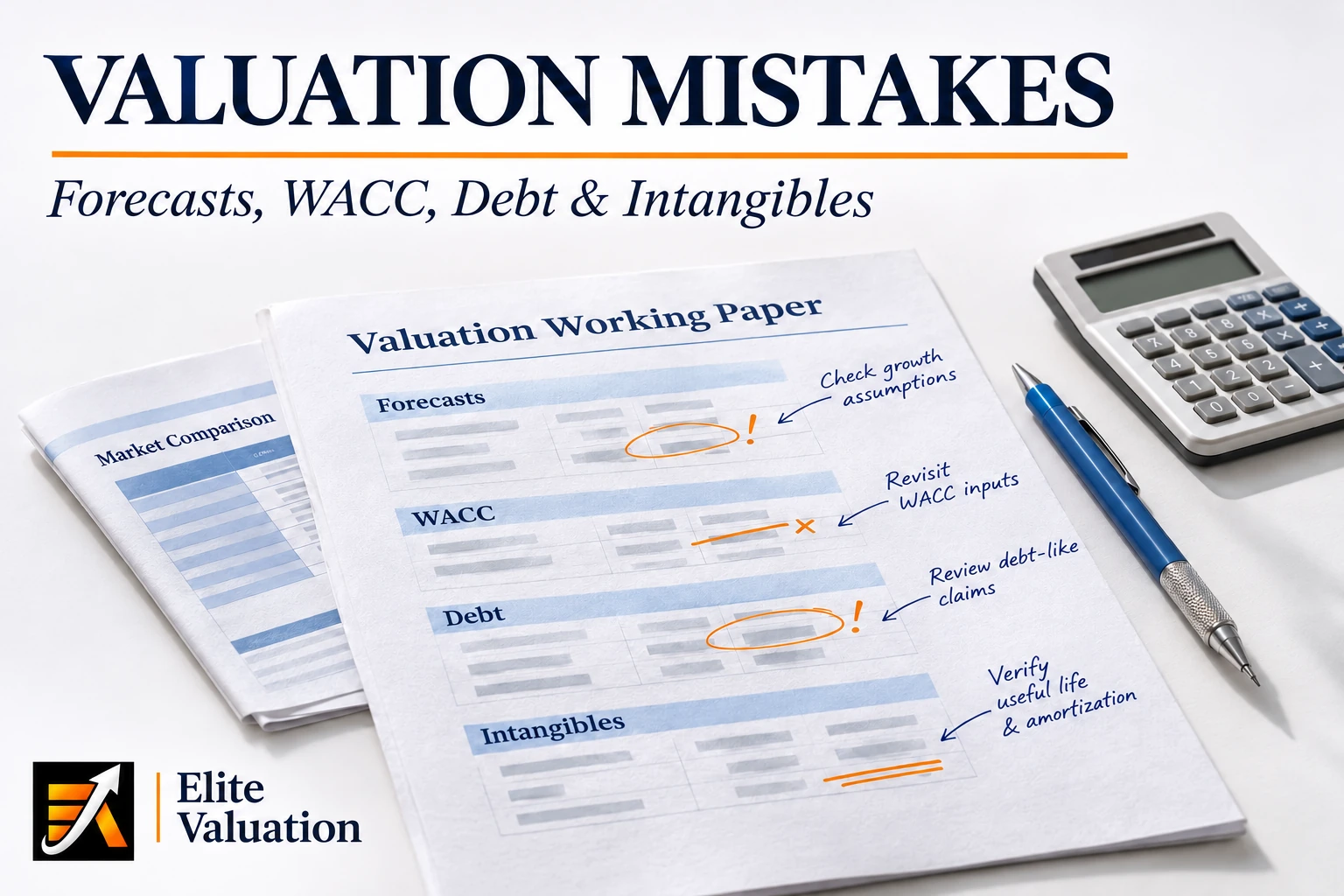
⚠️ AD Bank Scrutiny: AD banks specifically verify that the FMV methodology is "internationally accepted" — a simple book value or rule-of-thumb calculation will not pass. For companies with significant intangible assets, the DCF model must project cash flows over a realistic period and apply a risk-appropriate WACC. AD banks increasingly ask for the working model alongside the certificate.
What Does "Internationally Accepted Pricing Methodology" Mean Under FEMA?
📌 FEMA Pricing Methodology — What Qualifies
FEMA NDI Rules do not prescribe a single formula but require an "internationally accepted pricing methodology." In practice, the following approaches are accepted by AD banks and by RBI in adjudication proceedings:
- Discounted Cash Flow (DCF): Present value of projected free cash flows discounted at a risk-adjusted WACC — the most commonly used method for growth-stage companies
- Comparable Company Multiples (EV/EBITDA, EV/Revenue, P/E): Benchmarked against listed peers or recent comparable transactions — used as primary or cross-check method
- Net Asset Value (NAV): Fair market value of assets minus liabilities — used for asset-heavy businesses, holding companies and real estate entities
- Price of Recent Investment: For early-stage startups, the price paid by a recent arms-length investor is accepted as evidence of FMV if the interval is short and no material change has occurred
- Book value as prescribed under Rule 11UA: Acceptable for income tax purposes but generally insufficient standalone for FEMA — AD banks prefer a forward-looking method
FEMA Valuation for Resident and Non-Resident Share Transfers
Share transfers between residents and non-residents are reported through the FC-TRS form. Unlike fresh FDI issuances, share transfers involve an existing shareholder selling to or buying from a non-resident — and the pricing rules are directional, designed to prevent both capital flight and excess remittances.
🔼 Resident Transferring to Non-Resident — Price Must Be ≥ FMV
If an Indian promoter or investor sells shares to a foreign buyer, the sale price must be at or above the FMV. Selling below FMV is treated as an effective capital grant to the non-resident — resulting in an undisclosed outflow of value. The FMV is the floor; the parties may negotiate a premium above it.
🔽 Non-Resident Transferring to Resident — Price Must Be ≤ FMV
If a foreign investor sells its shareholding back to an Indian buyer, the purchase price must be at or below the FMV. Buying above FMV results in excess remittance abroad — representing an unreported capital outflow from India. The FMV is the ceiling; the parties may negotiate a discount below it.
FC-TRS Filing for Share Transfers
FEMA NDI Rules 2019 — Schedule I, Para 5
FC-TRS Within 60 Days of Transfer
CA / Merchant Banker FMV Certificate
The FC-TRS form must be filed within 60 days of the transfer of shares. The form requires disclosure of the transfer price, the FMV determined, and the professional who certified it. Both parties to the transfer (transferor and transferee) may be asked to file — the AD bank of the remitting party is responsible for accepting and forwarding the filing.
- The valuation date must be close to the date of transfer — typically not more than 6 months prior
- For promoter exits to foreign strategic or financial investors, the DCF-based FMV must be prepared with particular care — strategic buyers often pay a premium above FMV, which is permissible (price ≥ FMV for resident-to-NR)
- For buyback of shares by the company from a foreign investor, the company-side pricing must comply with the ≤ FMV rule — the company cannot pay the foreign investor above FMV for its shares
- Where the transaction also involves Securities Transaction Tax (STT) or involves a listed company, the SEBI ICDR or SAST pricing may also apply — both frameworks must be satisfied simultaneously
Deferred Payment Structures and Earnout Arrangements
Cross-border share transfers frequently involve deferred consideration — instalments, escrows or earnout structures where the final price depends on future performance. FEMA's pricing rules apply to the total consideration, and the valuation must establish that the aggregate expected payment (including deferred components) is consistent with the FMV at the time of transfer. For earnout structures, the valuation must model the probability-weighted scenarios that would produce the various payment outcomes — providing the AD bank with an expected total consideration that can be compared against FMV. Structuring deferred consideration arrangements without adequate upfront valuation documentation creates FEMA compliance risk if total payments eventually exceed FMV.
FEMA Valuation for CCPS, CCDs and Convertible Instruments
Compulsorily Convertible Preference Shares (CCPS) and Compulsorily Convertible Debentures (CCDs) are the instruments of choice for foreign venture capital and private equity investment in Indian companies. Their treatment under FEMA is a common source of compliance complexity — and a frequent trigger for AD bank queries.
CCPS / CCD Issued to Non-Resident — Equity Treatment from Day One
FEMA NDI Rules 2019 — Schedule I
Treated as Equity from Date of Issue
Issue Price and Conversion Price Both Must Be ≥ FMV
Under FEMA, CCPS and CCDs issued to non-residents are treated as equity — not debt — from the date of issue. This is a critical distinction: unlike an NCD (non-convertible debenture) which is debt under FEMA, a CCPS or CCD counts toward the FDI sector cap immediately upon allotment, not at conversion. The pricing implications are equally significant: the issue price must be at or above the FMV of the underlying equity at the time of allotment.
- The FEMA FMV certificate must value the equity shares into which the instrument will convert — not the instrument itself as a preference share or debenture
- The conversion pricing formula must be fixed at the time of original issue — it cannot be left to future board discretion, consistent with Rule 13(2)(h) of the Companies Act as well
- Anti-dilution provisions (broad-based weighted average or full ratchet) in the shareholder agreement must be structured so that the adjusted conversion price at any future down-round still meets the FMV test at that future date
- If the conversion price is set at a formula (e.g. "at 20% discount to next round price"), the AD bank may require an explanation of how this formula satisfies the ≥ FMV requirement on a forward-looking basis
⚠️ Common Trap: Many early-stage founders structure CCPS with nominal conversion ratios or below-FMV conversion prices to minimise dilution. Under FEMA, this is non-compliant — the conversion price must be at or above the FMV of equity at the time of the original allotment. A conversion arrangement that gives the foreign investor equity at below-FMV pricing on conversion is treated as an effective FDI below the prescribed floor.
Optionally Convertible Instruments — Debt Treatment Under FEMA
Optionally convertible preference shares (OCPS) and optionally convertible debentures (OCDs) are treated as debt under FEMA — not equity — because the holder has the option but not the obligation to convert. These instruments must comply with the External Commercial Borrowing (ECB) framework rather than the FDI pricing rules. This means the interest rate, tenor and end-use restrictions that apply to ECBs must be satisfied, and any conversion to equity triggers the FMV test at the time of conversion rather than at the time of issue.
FEMA Valuation for ECB Conversion to Equity
ECB to Equity Conversion — Pricing at Time of Conversion
FEMA ECB Framework — RBI Master Direction
Conversion Price ≥ FMV at Date of Conversion
ECB-2 Monthly Reporting + FC-GPR Post-Conversion
External Commercial Borrowings — foreign currency loans borrowed by Indian entities from overseas lenders — may be converted to equity under the FEMA ECB framework. The conversion is treated as an FDI inflow, and the equity issued must be priced at or above the FMV of shares at the time of conversion. The ECB lender (now an equity investor) becomes a foreign direct investor, subject to all FDI sectoral restrictions and pricing rules from that point.
- The FMV at conversion date must be freshly determined — the original FMV at the time the ECB was drawn cannot be used if considerable time has passed
- Any premium above FMV received in the conversion (where the ECB outstanding plus accrued interest exceeds the FMV of the equity issued) must be separately accounted and justified
- Post-conversion, an FC-GPR must be filed within 30 days of the allotment of shares to the former ECB lender
- The FMV certificate for the conversion is reviewed by the AD bank as part of the FC-GPR acceptance process
FEMA Valuation for ODI: Overseas Direct Investment
Overseas Direct Investment — Indian residents (individuals and companies) investing in foreign entities — is governed by the FEMA ODI framework under the RBI Master Direction on ODI. The pricing rules for ODI are the inverse of FDI: the Indian entity must not pay more than the FMV of the overseas entity's shares — preventing the effective export of capital at inflated prices under the guise of a foreign investment.
ODI — Indian Company Acquiring Stake in Foreign Entity
FEMA ODI Master Direction — RBI
Price Paid ≤ FMV of Overseas Entity
Form ODI Filed with AD Bank
When an Indian company acquires equity or other ownership interest in an overseas entity, the consideration paid must not exceed the FMV of the overseas entity's shares as determined by a SEBI-registered merchant banker or a CA using internationally accepted methods. The ODI form, along with the FMV certificate, is filed with the AD bank before the remittance is made — the remittance cannot proceed without the bank's acceptance of the ODI filing and the valuation documentation.
- The FMV of the overseas entity must be determined using the same internationally accepted methods — DCF, comparable company multiples, NAV — as for domestic FDI valuations
- For acquisitions of overseas entities at a strategic premium, the premium above FMV must be separately justified — some AD banks require additional documentation explaining the strategic rationale for any above-FMV payment
- For ODI by way of swap of shares — where the Indian entity issues its own shares to acquire overseas shares — both the Indian entity's share value and the overseas entity's share value must be FMV-certified
- Post-investment, annual performance reports (APR) must be filed, and significant events (disposal, disinvestment, restructuring) trigger additional ODI reporting with fresh valuation
⚠️ Key Risk: ODI payments made before the AD bank has accepted the ODI filing and FMV certificate constitute an FEMA violation — even if the underlying investment is otherwise compliant. The sequence matters: valuation certificate → ODI filing → bank acceptance → remittance. Any deviation from this sequence creates compounding liability.
ODI Through Automatic Route vs. Approval Route
ODI below 400% of the Indian entity's net worth qualifies for the automatic route — AD bank acceptance without RBI approval. Beyond that threshold, RBI approval is required. The valuation requirement applies to both routes. For approval route ODI, RBI's review also considers the FMV evidence — a weak or contested valuation at the RBI review stage can delay or block the entire overseas investment.
Disinvestment From Overseas Investment
When an Indian entity exits its ODI — selling the overseas shares to a third party or back to the overseas entity — the sale price must also satisfy FMV requirements. For resident-to-resident (Indian-to-Indian) transfers of ODI stakes, the Companies Act and income tax frameworks apply. For transfers to or from a non-resident in the context of the ODI, both the FEMA ODI and NDI frameworks may be triggered simultaneously, requiring careful structuring.
FEMA Valuation for Cross-Border IP and Intangibles
Transfer of intellectual property — patents, trademarks, copyrights, software, know-how, trade secrets — between an Indian entity and a foreign entity is a FEMA transaction where the consideration flows across the border. Whether the IP is transferred outright (assigned) or licensed (royalty-bearing), the pricing must be at arm's length under both FEMA and the income tax transfer pricing framework — and the two sets of requirements must be satisfied simultaneously.
Assignment of IP to Foreign Entity — Outright Transfer
FEMA NDI Rules — Intangible Assets
Transfer Pricing — Rule 10TA, OECD BEPS
cIBBI Registered Valuer Preferred for Complex IP Portfolios
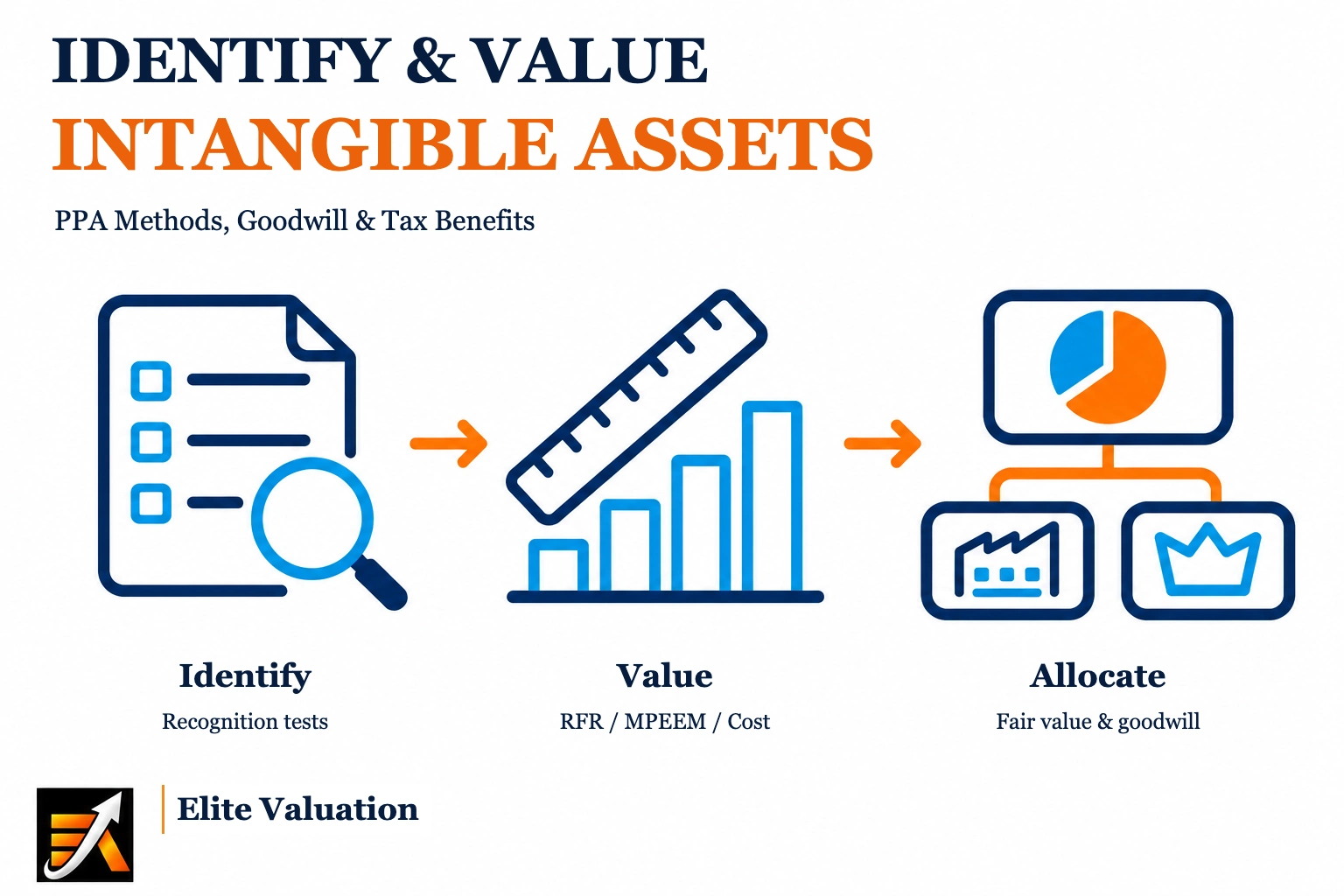
An outright assignment of IP by an Indian entity to its foreign subsidiary or associate is both a FEMA capital account transaction and a transfer pricing transaction. The consideration for the assignment must be at FMV under FEMA (certified by CA or merchant banker) and at arm's length under transfer pricing (documented per Rule 10TA and OECD guidelines). For valuable IP — pharmaceutical patents, software platforms, brand portfolios — the FMV determination using the relief from royalty method or MPEEM is technically demanding and AD banks scrutinise such valuations particularly carefully.
- IP transfer pricing documentation must be contemporaneous — prepared in the year of transfer
- The relief from royalty method requires benchmarked royalty rates from comparable licensing transactions — this is the most frequently challenged input by both AD banks and income tax authorities
- Where the IP transfer forms part of a group restructuring (e.g., IP migration to a lower-tax jurisdiction), SEBI, OECD and FEMA requirements may all apply simultaneously
Cross-Border IP Licensing — Royalty Payments
FEMA Current Account — Royalty Remittances
RBI Guidelines on Technology Transfer
Royalty payments from an Indian entity to a foreign licensor are current account transactions under FEMA and do not require prior RBI approval (subject to limits). However, the royalty rate must be at arm's length for transfer pricing purposes, and the AD bank may require documentation of the arm's length nature of the rate before processing large royalty remittances. A formal valuation establishing the appropriate royalty rate — using the comparable uncontrolled price (CUP) or comparable profits method — provides this documentation.
For the complete methodology covering IP valuation approaches including relief from royalty, MPEEM and with-and-without method, see our pillar guide on intangible asset valuation in India.
FEMA Valuation for LLP Interests and Other Instruments
FDI Into Limited Liability Partnerships
Limited Liability Partnerships (LLPs) are permitted to receive FDI under the automatic route in sectors that are not subject to performance conditions. The contribution by a foreign partner to an LLP must be at or above the FMV of the LLP interest being acquired. Unlike equity shares in a company, LLP interests do not have a standardised valuation framework — the valuation must establish the fair value of the LLP's underlying business using the same internationally accepted methods, then allocate value to the interest being transferred. The FC-GPR equivalent for LLP interests is filed with the AD bank alongside the FMV certificate.
Downstream Investment — Indirect FDI Through Indian Holding Companies
When a foreign-owned Indian holding company invests downstream into another Indian entity, the investment is treated as indirect FDI. The downstream investment must comply with FEMA pricing rules at both levels — the original FDI into the Indian holding company and the downstream equity issuance by the investee company. The FMV of the downstream investee's shares at the time of the downstream investment must be certified by a CA or merchant banker, and the holding company's own FMV must also be supportable given it now has this additional investment on its balance sheet.
Issue of Shares Under Employee Stock Option Plans to Non-Resident Employees
Listed Indian companies may issue ESOPs to non-resident employees (including employees of overseas subsidiaries) under the SEBI SBEB regulations, subject to FEMA compliance. The exercise price of options granted to non-resident employees must be at or above the FMV of the shares at the time of grant — the same FMV rule as direct FDI, applied at the grant date rather than the allotment date. Unlisted companies issuing ESOPs to non-resident employees require an IBBI-registered valuer report for Companies Act compliance, a separate FMV certificate for FEMA compliance, and an option fair value determination for Ind AS 102 accounting.
Pledge of Shares Held by Non-Residents
Creating a pledge over shares held by a non-resident investor (as security for a loan to an Indian promoter) requires prior RBI approval in most cases. The valuation of the pledged shares is required to establish the security cover available to the lender. An FMV-based valuation report from a CA or merchant banker is part of the regulatory filing for such pledge creation.How Do AD Banks Scrutinise FEMA Valuation Reports?
Authorised Dealer banks are not passive conduits for FEMA filings. Under RBI's AD bank framework, they are obligated to conduct due diligence on the transactions they process — including scrutinising the valuation methodology and documentation supporting each FC-GPR, FC-TRS and ODI filing. A bank that accepts a non-compliant filing bears regulatory exposure. This is why AD bank compliance officers routinely review valuation reports with the same analytical rigour as a sophisticated financial auditor — and why poorly prepared valuation reports are the single most common cause of FEMA filing delays.
🔍 What AD Banks Review in FEMA Valuation Reports
- Is the professional who issued the certificate in the prescribed category — CA or SEBI-registered merchant banker? An IBBI-registered valuer report alone, in the IBBI format, does not satisfy the FEMA certificate requirement
- Is the methodology genuinely "internationally accepted" — or is it a simple book value or a thumb-rule calculation that does not reflect income-generating capacity?
- Are the key assumptions — WACC, revenue growth rate, terminal growth rate, comparable multiples — disclosed and supported with market data references?
- Is the valuation date within 6 months of the transaction? Stale valuations are routinely queried
- Does the FMV conclusion on a per-share basis support the transaction price — or is the gap between FMV and transaction price unexplained?
- For CCPS/CCD issues, does the valuation address both the issue price and the conversion pricing mechanism?
- For ODI, is the overseas entity's FMV based on the latest available financials — or on projections that look overly optimistic relative to the entity's operating history?
- Is the professional's declaration of independence and the basis of the engagement clearly stated?
Why CAs and Merchant Bankers Rely on IBBI-Registered Valuers for Complex FEMA Transactions
The FEMA prescribed professional — a CA or SEBI-registered merchant banker — is required to issue the FMV certificate that accompanies the AD bank filing. However, the substantive analysis that supports that certificate — the DCF financial model, the comparable company benchmarking, the WACC derivation, the sensitivity analysis — is increasingly being prepared by IBBI-registered valuers, particularly for complex transactions.
📋 Why IBBI-Registered Valuers Are the Expert Layer Behind Complex FEMA Valuations
- IBBI-registered valuers are specifically trained and examined in financial modelling, valuation methodology and documentation standards — skills that are distinct from the tax and compliance expertise of a CA practice
- AD banks are increasingly pushing back on thin valuation certificates — a one-page certificate citing "DCF basis" without detailed working papers does not pass muster in a stringent AD bank review
- For transactions involving complex businesses — multi-product companies, intangible-heavy technology firms, early-stage startups with no comparable public comps — the quality of the underlying model determines whether the certificate survives scrutiny
- When a CA or merchant banker uses an IBBI-registered valuer for the substantive analysis, the certificate issued has detailed working papers, a rigorous methodology section and defensible assumptions — making it significantly more robust against AD bank queries
- In the event of an FEMA adjudication or RBI inquiry, a valuation backed by a formal IBBI-standard report with documented methodology is far more defensible than one supported only by a brief certificate
- At Elite Valuation, we regularly prepare the detailed valuation model and working papers for CAs and merchant bankers handling FEMA transactions — enabling them to issue a technically robust FMV certificate that sails through AD bank review without queries
Need a FEMA Valuation Report That Clears AD Bank Scrutiny?
Our IBBI-registered valuers prepare detailed, methodology-backed FEMA valuation workings for CAs and merchant bankers — and issue directly for applicable scenarios. Our reports are designed to answer AD bank queries before they are asked.
What Methodology Does FEMA Require for Valuation?
FEMA NDI Rules require valuation using an "internationally accepted pricing methodology" — but do not prescribe which one. In practice, the RBI and AD banks accept the same three methodologies used under the Companies Act and SEBI frameworks, applied with appropriate judgment for the specific transaction context.
| Method | Best For | Key FEMA Considerations | AD Bank Acceptance |
|---|---|---|---|
| DCF | Growth-stage, cash-flow generating businesses | WACC must reflect Indian entity's risk profile; projections must be management-approved and reasonable | High — if workings are provided |
| EV/EBITDA or EV/Revenue Comparables | Companies with identifiable listed peers | Peers must be genuinely comparable — same sector, similar size and geography; adjustments must be documented | High — with peer list justification |
| NAV (Net Asset Value) | Asset-heavy businesses, holding companies | Assets must be at FMV, not book value; intangibles must be identified even if not on balance sheet | High for asset-heavy; questioned for growth companies if used alone |
| Price of recent investment | Early-stage startups — pre-revenue or early revenue | Must be an arm's length transaction; interval since last round must be short with no material intervening events | Accepted for startups; scrutinised for time gap |
| Book value only | Not recommended as standalone | Does not reflect going-concern value or intangibles; frequently queried by AD banks for growth businesses | Frequently rejected for forward-looking businesses |
Combination of Methods — the Preferred Approach
For complex FEMA transactions — particularly high-value FDI rounds, ODI acquisitions in regulated sectors, and CCPS/CCD allotments to PE/VC funds — a single method certificate is increasingly challenged by AD banks. The preferred approach is to apply the primary method (DCF for growth companies, NAV for asset-heavy entities) with at least one cross-check method, and to present both results with a documented reconciliation explaining why the final FMV conclusion is supported by both approaches. This multi-method, working-paper-backed approach is where the involvement of an IBBI-registered valuer — who is trained and regulated to produce exactly this standard of output — adds the most value to a CA's or merchant banker's FEMA certificate.
Who Can Perform FEMA Valuation in India?
The FEMA NDI Rules 2019 prescribe specific professional categories for the FMV certificate. The certificate must be issued by:
| FEMA Valuation Purpose | Prescribed Professional | Role of IBBI Registered Valuer |
|---|---|---|
| FMV certificate for FDI equity issuance | CA or SEBI-Registered Merchant Banker | Prepares underlying DCF / comparables model; CA/MB issues the certificate based on IBBI RV's analysis |
| FMV certificate for share transfer (FC-TRS) | CA or SEBI-Registered Merchant Banker | Complex businesses — IBBI RV provides working papers; CA/MB issues certificate |
| FMV certificate for ODI overseas entity | CA or SEBI-Registered Merchant Banker | Overseas entity valuation — IBBI RV applies DCF / comparable methods; CA/MB certifies |
| IP transfer / royalty arm's length pricing | CA (transfer pricing specialist) | IBBI RV provides relief-from-royalty or MPEEM analysis; CA integrates into TP documentation |
| ECB conversion price | CA or SEBI-Registered Merchant Banker | IBBI RV determines equity FMV at conversion date; CA/MB certifies for FC-GPR |
| FEMA adjudication / compounding proceedings | IBBI Registered Valuer (preferred by FEMA authorities) | IBBI-standard report carries significant weight in adjudication proceedings and compounding applications |
📋 For Chartered Accountants and Merchant Bankers Handling FEMA Mandates
FEMA compliance requires your signature on the FMV certificate — but the quality of the underlying valuation workings determines whether your certificate survives AD bank scrutiny. For straightforward transactions with stable, asset-backed businesses, a CA-prepared valuation is typically sufficient. For complex transactions — high-growth startups, intangible-heavy technology companies, overseas entity acquisitions in unfamiliar markets, or CCPS/CCD structures with complex conversion mechanics — the DCF modelling and comparables analysis is precisely the domain where IBBI-registered valuers bring the depth and rigour that AD banks expect.
- At Elite Valuation, we prepare the complete valuation model, working papers and methodology documentation for CA and merchant banker-led FEMA mandates — enabling you to issue a certificate backed by institutional-quality analysis
- Our FEMA valuation workings are structured to pre-empt AD bank queries — WACC derivation is documented, comparable peer selection is justified, projection assumptions are linked to publicly available data, and sensitivity analysis is included
- We work seamlessly as your expert valuation partner — maintaining the CA / MB as the issuing professional while we provide the analytical rigour that protects the certificate from challenge
- For engagements where an FEMA adjudication or compounding proceeding is already underway, our IBBI-standard report carries significant weight with FEMA authorities in supporting compounding applications
- If you have a FEMA transaction that requires an expert valuation layer, reach out to us — we respond within 24 hours
What Are the Multi-Framework Overlaps in FEMA Valuation?
The most practically challenging FEMA transactions are those that simultaneously trigger multiple regulatory frameworks — each with its own FMV standard, methodology and professional requirement. Understanding these overlaps is essential to structuring a compliant transaction without conflicting valuations that invite regulatory challenge.
Scenario A: Startup Raises Series A From Foreign VC — CCPS Issue
FEMA + Companies Act + Income Tax — All Three Triggered
- FEMA (NDI Rules): Issue price ≥ FMV; conversion pricing fixed upfront — CA / MB certificate required for FC-GPR
- Companies Act (Section 62 + Rule 13): IBBI-registered valuer report required for the preferential allotment — separate document from the FEMA certificate
- Income Tax (Section 56(2)(x)): Investor's side — if issue price is above FMV, excess is taxed as income. FMV per Rule 11UA must be reconciled with FEMA FMV
Scenario B: Indian Promoter Sells Stake to Foreign Strategic Buyer
FEMA FC-TRS + SEBI SAST (if listed) + Income Tax 50CA — Multiple Triggers
- FEMA (FC-TRS): Transfer price ≥ FMV — CA / MB certificate required
- Income Tax (Section 50CA): If transfer price is below FMV, seller's capital gains are computed as if FMV was the consideration — Rule 11UA method applies
- SEBI SAST (if listed target): If acquisition crosses 25% threshold, mandatory open offer triggered — IBBI-registered valuer required for open offer price (infrequently traded)
- The FEMA FMV, income tax FMV and SAST open offer price must be consistently derived — inconsistent valuations across the three frameworks invite regulatory challenge from multiple directions simultaneously
Scenario C: Indian Company Transfers IP Portfolio to Singapore Subsidiary
FEMA + Transfer Pricing + Income Tax Capital Gains — Triple Overlap
- FEMA: Consideration for IP transfer must be at FMV — CA / MB certificate; AD bank reviews before processing the remittance
- Transfer Pricing (Rule 10TA): Transaction must be at arm's length — contemporaneous TP documentation required using CUP, profit split or other OECD-accepted method
- Income Tax (Section 45 / 55): Capital gains on the IP transfer are computed on the higher of the transaction price and FMV — full value of consideration rule applies
- A single integrated valuation engagement — relief from royalty or MPEEM for the IP — can simultaneously serve all three purposes if structured with the appropriate format and professional sign-off for each
What Are the Common Mistakes in FEMA Valuation?
❌ Stale valuation — certificate dated more than 6 months before transaction
AD banks consistently reject FEMA filings supported by valuation certificates dated more than 6 months before the transaction date. Financial conditions change, comparable multiples shift, and the company's performance may have materially diverged from the basis used in the earlier valuation. The certificate must be contemporaneous — prepared as close to the transaction date as practicable.
Consequence: AD bank rejects the FC-GPR or FC-TRS filing; remittance cannot proceed; transaction timeline delayed; in some cases, the FEMA violation clock starts running from the date the transaction occurred, creating compounding liability.
❌ Using book value as the sole methodology for a growth business
Book value reflects historical cost of assets, not going-concern value or future earnings capacity. For any business with significant intangibles — brands, customer relationships, technology, distribution networks — book value materially understates FMV. An AD bank compliance officer reviewing a CCPS issuance to a foreign PE fund at a significant premium to book value, with only a book value certificate as justification, will raise a query requesting forward-looking methodology.
Consequence: AD bank query delays the FC-GPR filing; the foreign investor's funds are held in the escrow/bank account while the revised certificate is prepared; investor confidence impacted./span>
❌ CCPS conversion pricing left open or subject to future determination
Under both FEMA NDI Rules and Rule 13(2)(h) of the Companies Act, the conversion price or pricing formula for CCPS/CCDs must be fixed at the time of the original issue. A term sheet that specifies conversion "at 20% discount to the next round" or "at the board's discretion at conversion" does not satisfy FEMA's pricing requirement — the FMV at conversion must be determinable as of the issue date. AD banks encountering open-ended conversion pricing will delay or reject the FC-GPR until the pricing formula is clarified and supported by valuation.
Consequence: FC-GPR rejected or held pending restructuring of conversion terms; shareholder agreement amendments required; legal costs and timeline impact.
❌ Submitting the Companies Act IBBI valuer report in place of the FEMA FMV certificate
The IBBI-registered valuer report in IBBI format is addressed to the board and is prepared under IBBI Valuation Standards for Companies Act compliance. AD banks require the FMV certificate in the FEMA format — issued by a CA or SEBI-registered merchant banker, explicitly referencing the internationally accepted methodology, and addressed to the AD bank for FEMA compliance. The two documents serve different regulatory purposes and cannot substitute for each other. Using an IBBI report format where a CA/MB certificate is required causes immediate filing rejection.
Consequence: FC-GPR or FC-TRS rejected; fresh FEMA-format certificate required; if the allotment or transfer has already occurred, the FEMA violation timeline has started.
❌ Inconsistent FMV across FEMA, Companies Act and income tax frameworks in the same transaction
In a startup CCPS round involving a foreign investor, the FEMA FMV (certified by CA), the Section 62 fair value (determined by IBBI-registered valuer) and the Rule 11UA FMV (for income tax) must be broadly consistent — they are all measuring the same equity at approximately the same date. Material discrepancies between the three — for example, a DCF-based FEMA FMV that is significantly different from the Rule 11UA NAV-based FMV — invite income tax scrutiny of the differential, even if each document is individually technically correct.
Consequence: Income Tax Department issues notice on Section 56(2)(x) grounds based on discrepancy between FEMA FMV and Rule 11UA FMV; additional tax demand on the investor; professional credibility of all three valuations questioned.
❌ Inconsistent FMV across FEMA, Companies Act and income tax frameworks in the same transaction
In a startup CCPS round involving a foreign investor, the FEMA FMV (certified by CA), the Section 62 fair value (determined by IBBI-registered valuer) and the Rule 11UA FMV (for income tax) must be broadly consistent — they are all measuring the same equity at approximately the same date. Material discrepancies between the three — for example, a DCF-based FEMA FMV that is significantly different from the Rule 11UA NAV-based FMV — invite income tax scrutiny of the differential, even if each document is individually technically correct.
Consequence: Income Tax Department issues notice on Section 56(2)(x) grounds based on discrepancy between FEMA FMV and Rule 11UA FMV; additional tax demand on the investor; professional credibility of all three valuations questioned.
Need a FEMA Valuation Report That Clears AD Bank Review?
Our IBBI-registered valuers prepare technically rigorous FEMA valuation workings — FDI, ODI, CCPS/CCD, ECB conversion, IP transfers — with methodology documentation built to pre-empt AD bank queries and withstand FEMA adjudication scrutiny.
Closing Summary: FEMA Valuation as the Compliance Gatekeeper
FEMA valuation is the regulatory gatekeeper for every cross-border transaction involving Indian equity — from a small startup's first foreign angel round to a billion-dollar strategic acquisition. The pricing rules are not complex in concept — FMV from resident to non-resident, not above FMV from non-resident to resident — but their application demands financial modelling rigour, methodology documentation, and professional coordination across FEMA, Companies Act and income tax frameworks simultaneously. AD banks, having absorbed the liability consequences of accepting non-compliant filings, have significantly increased the depth of their valuation scrutiny — making thin, template-format certificates increasingly inadequate for complex transactions. The best-positioned practitioners for this environment are those who combine a CA's or merchant banker's FEMA certification authority with an IBBI-registered valuer's financial modelling depth — whether through a single combined engagement or through a coordinated two-professional approach. At Elite Valuation, we provide the IBBI-registered valuation layer that makes FEMA certificates robust, AD bank-ready, and defensible in the event of any regulatory inquiry — directly for transactions where we serve as the FEMA expert, and as a specialist valuation partner for CAs and merchant bankers managing the broader compliance mandate.
Frequently Asked Questions — FEMA Valuation

CA Sagar Shah, Founder
Mr Sagar Shah is the Founder of Elite Valuation and leads the firm’s Valuation and Advisory practice. With over 15+ years of professional experience.