Business Valuation · Insight
Flipkart’s ESOP Liquidity Gap: Why Vesting Is Not Liquidity
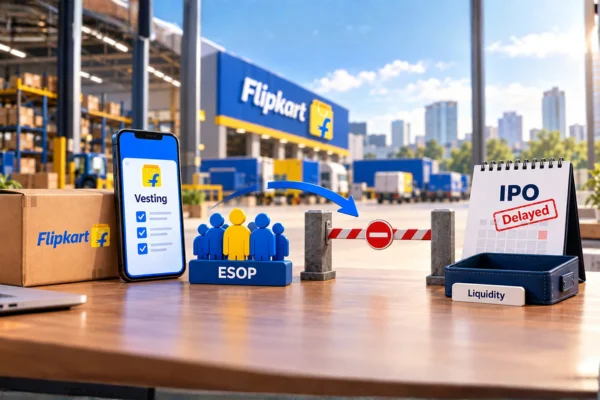
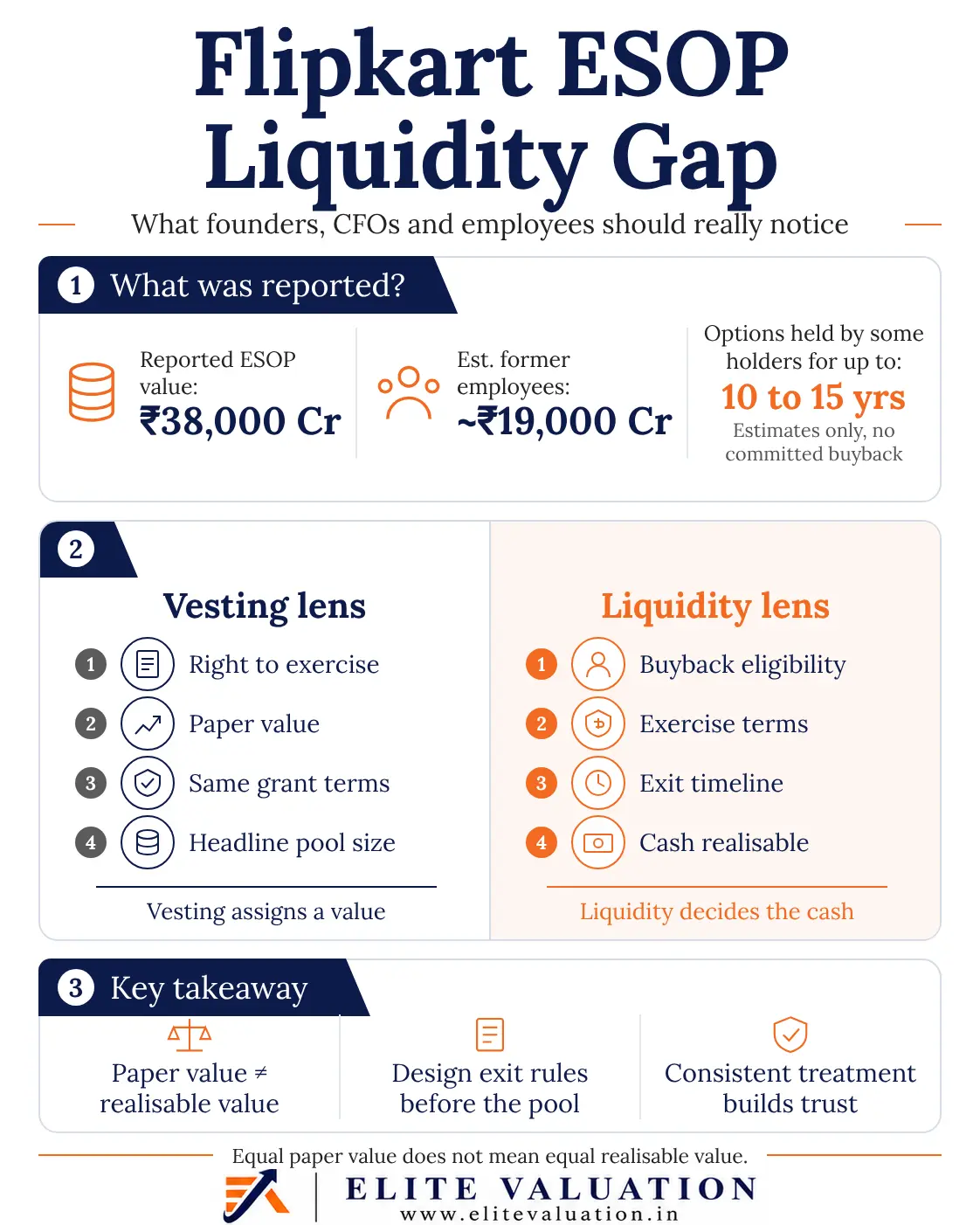
At least eight former Flipkart executives, including Mukesh Bansal and Ankit Nagori, have reportedly written to Walmart's chairman and senior leadership asking for a liquidity opportunity on their vested ESOPs. Press reports estimate that more than 30,000 current and former employees could collectively receive about ₹38,000 crore (around $4 billion) through buybacks yet to be facilitated, with roughly ₹19,000 crore attributable to former employees. Some of these options have been held for 10 to 15 years.
These are reported estimates, not a committed buyback. In 2026, eligible active employees reportedly could sell up to 5% of options vested over a specified three year period, while former employees were outside that window, and no IPO date is confirmed. The question this raises sits at the heart of every ESOP Valuation and plan design exercise in India: vesting creates a right, but only liquidity turns that right into cash.
Vesting gives an employee a claim on value. It does not, on its own, give that person cash. When a company decides who receives liquidity and who waits, it is making a governance decision, whether or not it describes it that way.
For a valuer, the first question is what the options are worth. The more important question is when that value can be realised, on what terms, and whether the people who earned it are treated consistently. Similar paper value does not mean equal realisable value.
Flipkart's ESOP Liquidity Question
Why This Matters
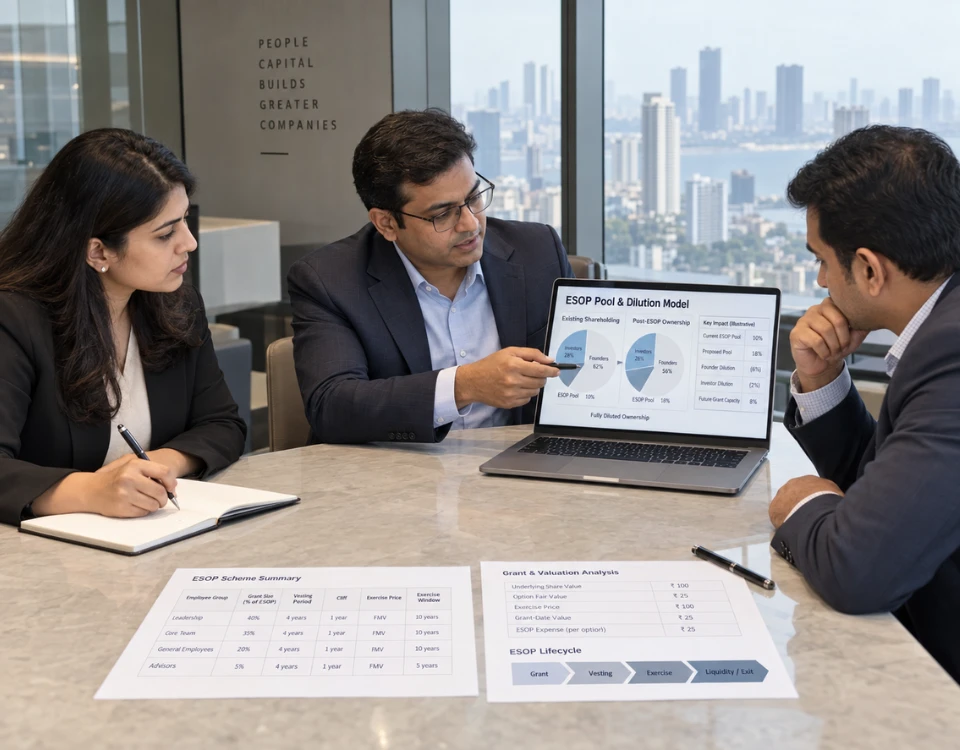
- Fair value is not realisable value. The grant-date fair value used for Ind AS 102 expense reflects what an option is worth, not what a holder can sell today, as explained in our ESOP Valuation framework.
- Liquidity access changes the economics. Comparable vested options with different buyback eligibility, exercise terms and exit timelines are not economically equal, even when the paper numbers match.
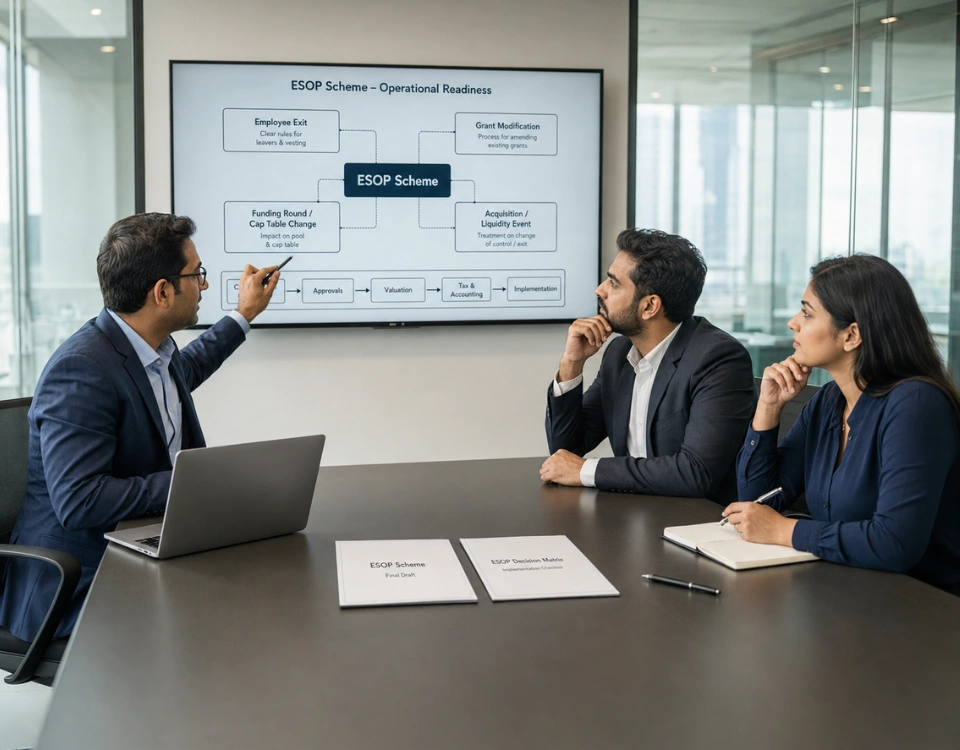
- Post-exit terms are design variables. Exercise windows after leaving, buyback eligibility and a prolonged IPO delay belong in plan design alongside pool size, exercise price, vesting and dilution.
- Buyback pricing needs independent support. A broader buyback needs far more capital and a defensible price. See our startup Valuation framework for how a Valuation supports pricing and funding decisions.
When ESOP Liquidity Is Equitable, and When It Isn't
| Signals Equitable Design | Signals a Governance Gap |
|---|---|
| Buyback eligibility defined in the plan rules | Eligibility decided case by case after the event |
| Same formula for current and former holders | Liquidity limited to those still on the payroll |
| Post-exit exercise window long enough to be usable | Short window forces exercise at a poor moment or lapse |
| Price supported by an independent Valuation | Price set without a documented basis |
| Funding source identified before announcement | Buyback announced with no capital plan |
| Terms disclosed to every holder in writing | Informal assurances and side arrangements |
Six Questions Before You Design ESOP Liquidity
- Do the plan documents, not emails, define who can seek a buyback?
If eligibility is unclear on paper, the dispute will surface exactly when liquidity is scarce. - Would two holders with comparable vested options realise comparable value?
If payroll status alone decides who receives cash, the plan has created two classes of holders. - Can a departing employee realistically fund the exercise price and tax within the window?
A right that cannot be funded within its window is worth less than its paper value. - How would a multi year IPO delay change what holders can actually realise?
A listing that keeps slipping turns a long held option into an illiquid claim. - What capital would a buyback open to all holders require, and from whose balance sheet?
A policy that cannot be funded is a hypothesis, not a promise. - Would the buyback price survive independent review under Ind AS 102, Ind AS 113 and the plan's own rules?
A price that clears only one of these frameworks is exposed on the others.
THE TAKEAWAY. Vesting may create an exercise right. Valuation assigns a value. But liquidity determines when that value can become cash. The Flipkart request is not a verdict on any one decision. It is the same latent gap, made visible, that sits inside every ESOP plan in India.
The discipline is to design the exit before someone else raises the question, whether that someone is a former employee, a board, or a regulator reviewing the plan. Founders and CFOs should look beyond pool size, exercise price, vesting and dilution to post-exit exercise windows, buyback eligibility and the cost of a delayed IPO.
Is your ESOP plan designed for liquidity, not just vesting?
Planning an ESOP buyback, a secondary sale or a plan redesign? Elite Valuation provides independent Valuation reports and structuring support for ESOP fair value, buyback pricing and secondary transactions, under Ind AS 102, Ind AS 113, Rule 11UA, SEBI SBEB and FEMA NDI Rules.

Founder - Elite Valuation
CA Sagar Shah
IBBI Registered Valuer & Business Valuation Expert in India
Chartered Accountant (All India Rank) · Company Secretary · Ex-Ernst & Young.
15+ years advising Promoters, Investors, and MNCs on Valuation, ESOP, M&A, FEMA, AIF, Transfer Pricing, and Cross-Border Transactions across India.
- CA — All India Rank
- Company Secretary
- IBBI Registered Valuer
- Ex-Ernst & Young
- 500+ Clients