ESOP Advisory · Insight
Temple’s Pre-Launch ESOP Liquidity: What Founders Can Learn
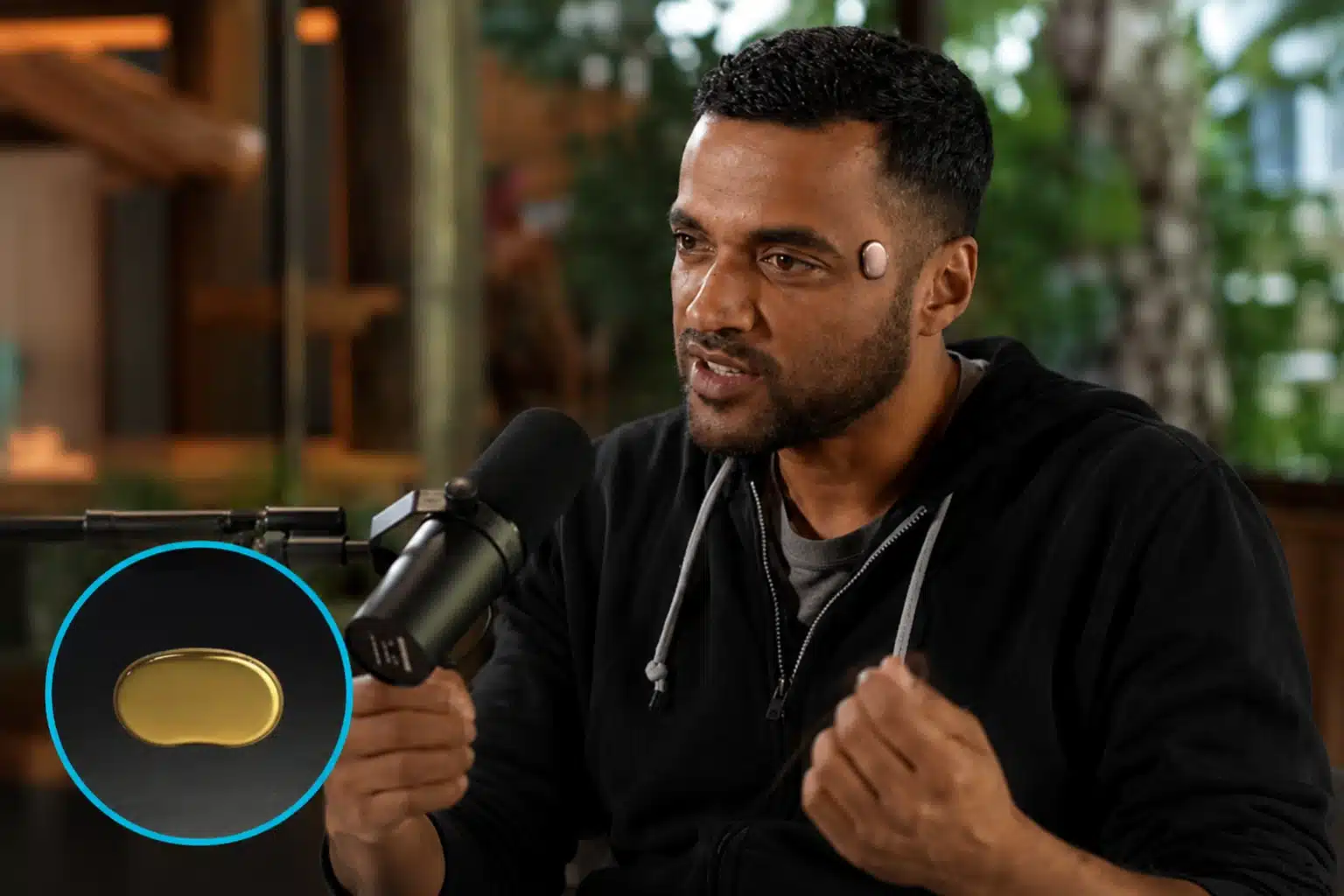
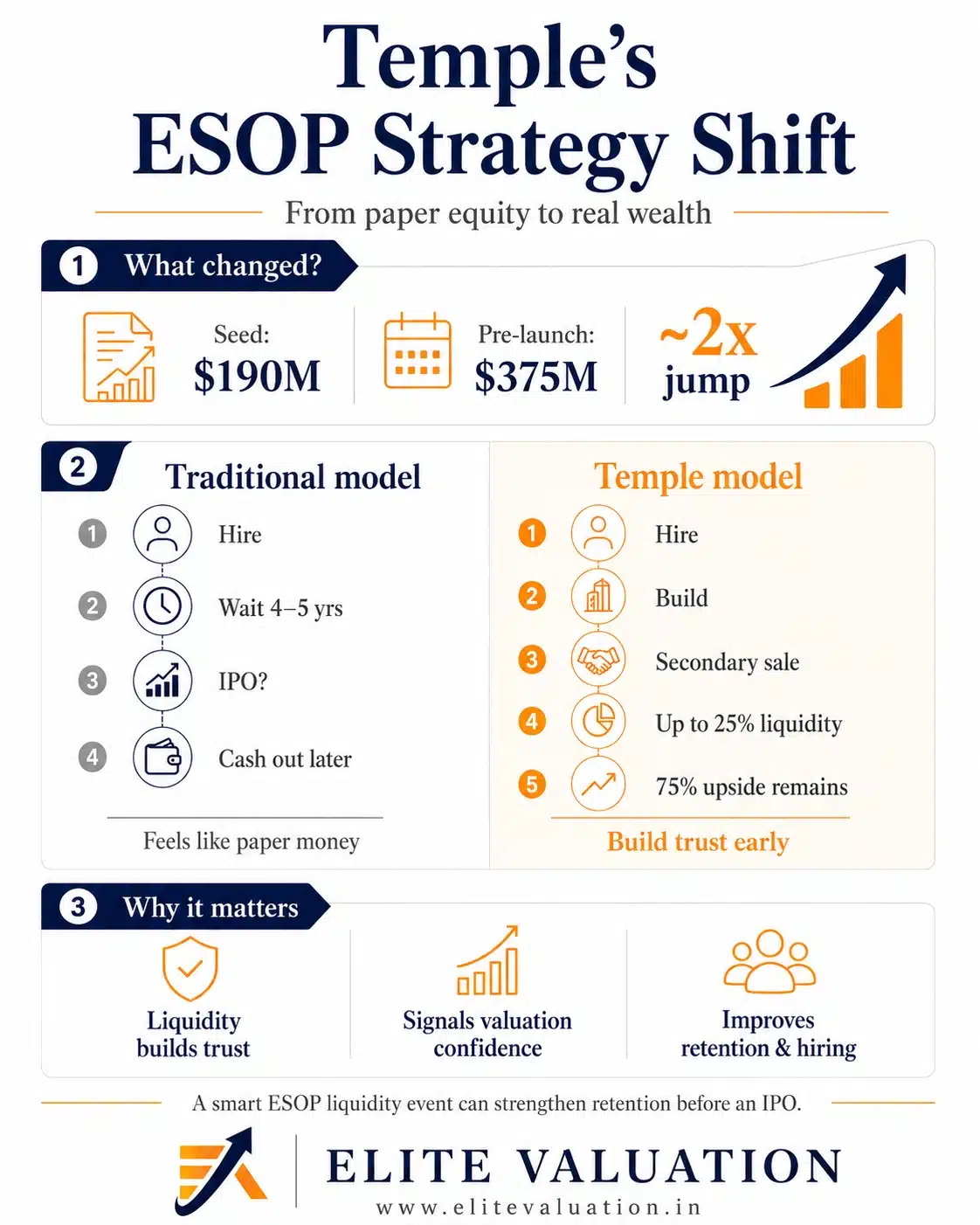
Temple, the wearable-technology startup founded by Deepinder Goyal, has reportedly offered selected early employees an opportunity to monetise up to 25% of their vested ESOPs — before its commercial product launch, and at a valuation of $375 million against approximately $190 million in its earlier seed round.
That timing is what makes it interesting. Most employees wait for an IPO, acquisition or buyback before ESOPs produce actual liquidity. Temple has chosen to compress that wait.
Temple's move is less about the price and more about the signal. When a founder lets employees take real money off the table before launch, the ESOP stops being a promise and starts behaving like an asset.
But a limited liquidity price is not automatically Fair Market Value for tax or reporting. Structure, eligibility and pricing decide whether the programme strengthens the ESOP — or weakens it.
Why This Matters
- Real wealth, not paper wealth. A liquidity event proves employee equity can have observable monetary value, not just a future promise.
- Continuing upside preserved. Capping at 25% rewards past contribution while retaining 75% of the employee's forward alignment.
- Retention and recruitment. Demonstrated wealth creation is a powerful talent signal in a competitive market.
- A valuation cue — with caveats. The $190M → $375M step suggests growing confidence in Temple's team and technology.
When Early ESOP Liquidity Works — and When It Doesn't
| Suitable Where | Premature Where |
|---|---|
| Meaningful value has been created since grant | The transaction price is not adequately supported |
| Employees have completed reasonable service | Scarce operating cash is used to fund the programme |
| Credible investors are willing to purchase employee equity | Eligibility criteria appear unclear or selective |
| There is a clear retention or reward objective | Employees do not understand the tax consequences |
| Employees retain meaningful continuing ownership | Too much employee equity is being monetised |
| Pricing and structure are properly evaluated | Expectations of frequent future liquidity are created |
Six Questions Before You Launch a Programme
- Why offer liquidity? Retention, reward, recruitment, or an investor-led secondary?
- Who is eligible? Criteria must be clear and consistently applied.
- What can be monetised? Vested options, exercised shares, or another security?
- How much can be sold? Balance present liquidity with future alignment.
- How is the price set? Funding-round price, secondary price and regulatory FMV may all differ.
- Who provides the liquidity? The company, an existing investor, a new investor?
The takeaway. Temple's move is not a formula every startup should copy. The real lesson is that well-designed ESOP liquidity — with credible pricing, transparent eligibility and thoughtful incentive design — can become an effective corporate-finance and talent tool.
ESOPs should not merely be granted and forgotten. They should be actively valued, communicated and managed throughout the company's growth journey.
Planning an ESOP Liquidity Event or Buyback?
Elite Valuation provides independent Valuation reports and structuring support for ESOP grants, exercise events, secondary transactions and buybacks — under Rule 3(1)(d), Rule 11UA, Ind AS 102 and SEBI SBEB frameworks.

Founder - Elite Valuation
CA Sagar Shah
IBBI Registered Valuer & Business Valuation Expert in India
Chartered Accountant (All India Rank) · Company Secretary · Ex-Ernst & Young.
15+ years advising Promoters, Investors, and MNCs on Valuation, ESOP, M&A, FEMA, AIF, Transfer Pricing, and Cross-Border Transactions across India.
- CA — All India Rank
- Company Secretary
- IBBI Registered Valuer
- Ex-Ernst & Young
- 500+ Clients